Since its inception in 2009 by an anonymous developer named Satoshi Nakamoto, Bitcoin has established itself as an innovative asset that has changed the paradigm of the financial market. While many perceive Bitcoin merely as currency or an investment product, understanding the underlying blockchain technology and the philosophy of decentralization is the first step toward successful investing. Why does Bitcoin have value? And why should we pay attention to this market?
Why is Bitcoin called digital gold?

The reason Bitcoin earned the nickname 'digital gold' lies in its scarcity and durability. Gold has long been cherished as a store of value because its reserves on Earth are limited. Bitcoin also has a protocol-limited supply of 21 million, a figure that is mathematically fixed and impossible to adjust artificially. This is fundamentally different from fiat currency, where central banks can print money without limit.
Furthermore, Bitcoin possesses powerful mobility, allowing it to be transferred across borders anywhere in the world as long as there is internet access. The ability to safely store and move assets through a personal digital wallet without the massive costs or storage difficulties associated with transporting physical gold bars is a strong competitive advantage in today's digital society.
As a digital asset, Bitcoin goes beyond the function of storing value; its value is proven by the security of the network and the consensus of its participants. Historically, if gold maintained its value through physical scarcity, Bitcoin preserves its value by implementing uniqueness that cannot be replicated digitally through mathematical algorithms. Investors highly value its potential as an inflation hedge based on this digital scarcity.
To truly grasp the value of Bitcoin in real-world situations, one must understand the difference between a 'store of value' and a 'medium of exchange.' Many experts recommend using Bitcoin as 'digital gold' for long-term value preservation rather than as a short-term payment tool. As a checkpoint, it is recommended to check the trend of Bitcoin's network hashrate. A higher hashrate indicates a more secure network, which serves as a pillar supporting the fundamental value of the asset.
What determines the price of Bitcoin?
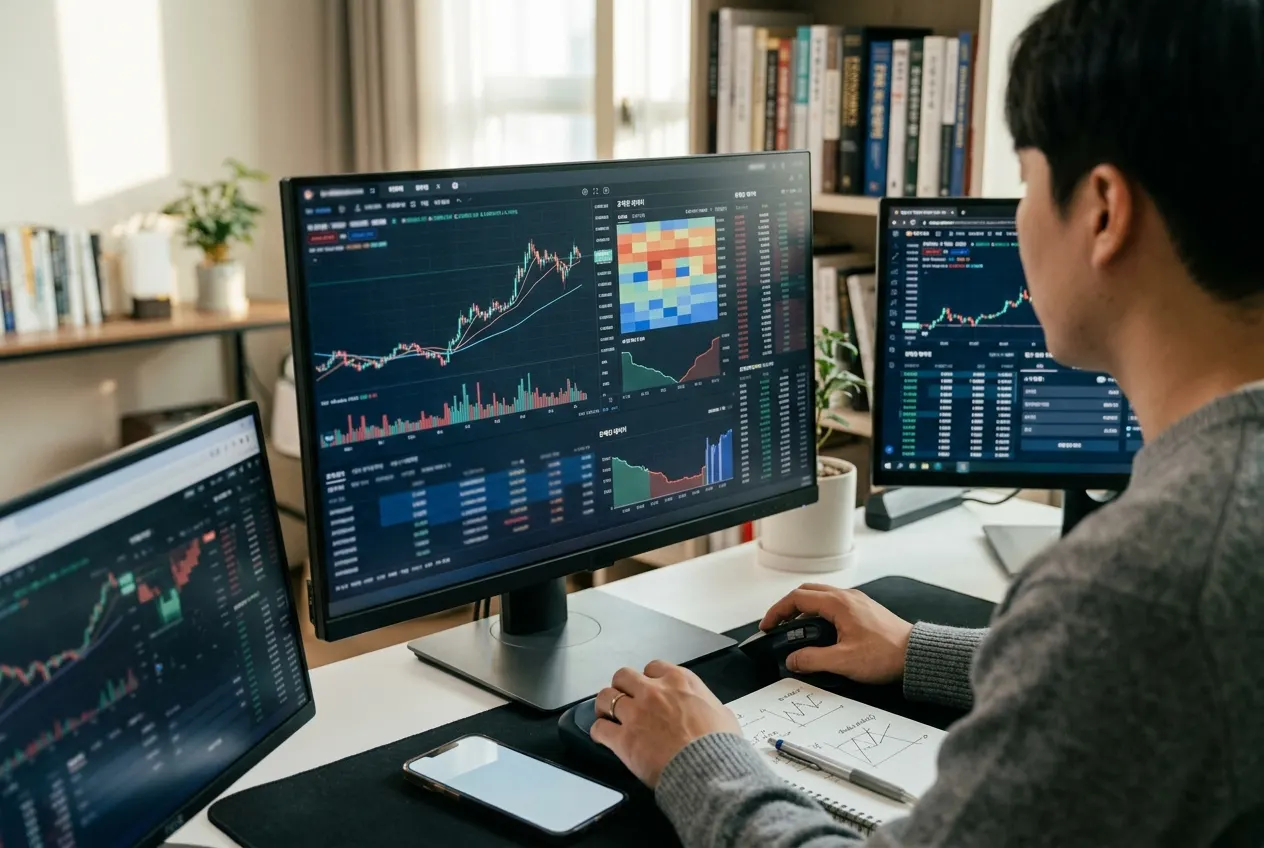
Bitcoin prices are determined differently from assets with clear profit models, such as stocks or real estate. The biggest factor is the law of supply and demand. Since supply is fixed by code, market trust and demand ultimately determine the price. However, the factors stimulating that demand are highly complex.
First, it is heavily influenced by the macroeconomy. When interest rates rise, funds tend to flow out of Bitcoin, which is classified as a risk asset, while improved liquidity boosts investment sentiment. Second is the influx of institutional investors. Recent institutional adoption, such as the approval of spot ETFs, is transforming Bitcoin from a mere speculative tool into a part of portfolios. Third is the halving issue. The halving, which cuts mining rewards in half every four years, creates a supply shock that significantly impacts price volatility. Please check out the practical guide to understanding Bitcoin price changes and market trends for more specific market analysis.
When identifying market price determinants, one must be careful with data interpretation. On-chain data shows whether Bitcoin is flowing into exchanges or being withdrawn to personal wallets, which is an important indicator for gauging selling pressure and buying intent. Additionally, observing whether Bitcoin reacts as a safe-haven asset or correlates with risk assets during global geopolitical risks is an essential skill for investors. Ultimately, the core of price determination is the interaction between 'psychology' and 'liquidity.'
What risks must you know before starting to invest?
Bitcoin investing comes with high volatility, just as it offers high profit potential. The first thing a beginner must guard against is 'volatility.' In a market where prices can fluctuate by 10-20% in a single day, emotional reactions are a cause for losing assets in an instant.
Also, awareness of security incidents is necessary. Exchange hacks or lost passwords for personal wallets are often unrecoverable. The decentralization ethos of 'protecting my own assets' requires a high level of responsibility. When using an exchange, it is essential to set up two-factor authentication (2FA) and use a reliable, large-scale exchange.
For risk management, the following checkpoints are recommended: First, verify if the exchange supports cold wallet (offline) storage for assets. Second, cultivate the habit of checking official addresses to protect yourself from phishing sites or fraudulent projects. Third, recognize that beyond technical risks, there are regulatory risks, and periodically check if the assets you are investing in are being traded within the legal framework of your country. As a precaution, completely avoid unverified exchanges or platforms that promise abnormally high returns.
A practical checklist for Bitcoin investing

For successful investing, please check the following points yourself: 1) What is my investment goal? (Short-term profit vs. long-term holding), 2) Is this money that won't affect my daily life if lost? 3) Can I hold on without panic selling when the market crashes? 4) Have I diversified my portfolio with other asset classes besides Bitcoin? It is best to start investing only when you can clearly answer these questions.
The most common mistake in the investment process is 'all-in investing.' Bitcoin should be used as part of an asset allocation strategy. It is stable to adjust the weight to within 5-10% of total assets to diversify risk, while holding the rest in safe assets or cash.
As a practical method, we recommend the 'Dollar Cost Averaging (DCA)' strategy. This is a method of lowering the average unit price by buying the same amount at regular intervals, rather than trying to predict market highs and lows. It is a very effective tool for managing your mindset and maintaining a long-term perspective in a volatile market. Simply adjusting the purchase cycle to fit your investment style can change the level of your risk management. Also, it is important to periodically perform portfolio rebalancing to realize some profits when the Bitcoin portion becomes excessively large.
Why is technical understanding important?
The core of Bitcoin is blockchain. The fact that transaction records are distributed and stored across tens of thousands of nodes rather than on a central server ensures system transparency. There is a belief among investors that as long as this technical trust is not broken, Bitcoin's value will persist. You don't need to understand all the technical details, but you should grasp why this technology is innovative and what problems of the existing financial system it is solving so you aren't swayed by market noise.
The decentralization philosophy of blockchain ensures data integrity. This means transaction history cannot be manipulated, providing investors with trust in the system. Understanding the technical background gives you a much broader perspective than just looking at price charts. For example, an increase in network hashrate (mining power) means the network is becoming more secure, which can be interpreted as a positive signal for asset value in the long term. Checking the security and degree of decentralization of the system is a basic skill that investors should possess.
Bitcoin and the direction of future finance
Currently, Bitcoin is in a transitional period of being incorporated into institutional finance. Regulatory frameworks are being prepared by governments worldwide, which paradoxically proves that Bitcoin is an asset that will not disappear. The fact that governments are regulating it also means its influence has grown. Therefore, you need the ability to read market changes by consistently following regulatory news.
In future finance, Bitcoin is expected to solidify its role as a store of value. The ecosystem based on Bitcoin, such as cross-border instant payment systems or financial products linked to smart contracts, continues to expand. As investors, we must constantly contemplate how these technological advancements will affect our assets and how to protect and manage our assets in a changing financial environment.
In conclusion, Bitcoin is not just a game of rising numbers. It is an attempt to change the philosophy of finance and restore individual asset sovereignty. It is important to understand rather than fear market volatility, and to approach it with a long-term view by establishing your own investment principles. All investment decisions are your own responsibility, and you should always consult with experts or proceed cautiously after sufficient self-study.
Finally, to sustain investing, regular learning must accompany it. Monitor not only market news but also updates in Bitcoin technology and changes in the policy stances of central banks worldwide. Knowledge is the most powerful shield to reduce risk. Investing is like a marathon. Rather than being swayed by short-term profits, cultivating the discernment to read market trends while sticking to your established investment philosophy is the wisest approach. Sticking to your principles and forming healthy investment habits is the only path to success in Bitcoin investing.
Frequently Asked Questions
Is Bitcoin really a safe asset?
While Bitcoin boasts very strong security technically, it is classified as a risk asset from an investment perspective due to its high price volatility. You should approach it cautiously, considering your investment style and financial situation.
How much is the minimum investment?
Most exchanges support fractional trading, so you can start investing with a very small amount. What is important is your asset allocation strategy rather than the size of the amount.
What is the most important thing to be careful about when investing in Bitcoin?
Security settings against exchange hacks, private key management, and principle-based investing that is not swayed by emotions are the most important.
What is the halving and why is it important?
The halving refers to the time when Bitcoin mining rewards are cut in half. It serves to increase scarcity by reducing supply and has historically been a driver of price increases.