Power strips are indispensable tools in homes and offices. However, many people overlook the dangers hidden behind their convenience. There are three keys to using power strips safely: 'adhering to capacity limits,' 'avoiding daisy-chaining,' and 'periodic status checks.' Following just these three rules can prevent most electrical fires. It is a very dangerous habit to plug all your devices into one place simply because there are many outlets available. From now on, we will look at a concrete guide to using power strips more safely and efficiently.
Why is the power strip's capacity limit important?

Every power strip has a specified power capacity (W). It is usually marked on the back or side of the product as 2,800W or 3,000W, which indicates the maximum load the power strip can handle. The appliances we use have different power consumption levels. For example, if you connect multiple high-power devices such as refrigerators, air conditioners, or electric heaters to a single power strip, you will exceed the capacity in an instant.
Exceeding the capacity causes the internal wires to overheat, which can melt the surrounding plastic or lead to a fire. This 'overload' is the reason why accidents are frequent, especially when the use of electric heating appliances increases in winter. Therefore, before using a power strip, you must calculate the total power consumption of the devices to be connected to ensure it is within the power strip's capacity. For example, if you have a 2,800W power strip, it is safe to keep actual usage at 80% of that, or below 2,240W. If you need to use high-capacity appliances, it is essential to choose a 'high-capacity power strip' rather than a standard one, and it is safest to connect high-power devices directly to a wall outlet whenever possible.
High-capacity appliances usually refer to products that consume over 1,000W. This includes microwaves, induction cooktops, hair dryers, and electric kettles. When using these devices, you should also check the thickness of the power strip's cord. Thicker wires can safely carry more current, while low-cost products often have thin wires that are more susceptible to overload. Therefore, it is a wise choice to use products equipped with thick wires of 16A or higher, designed specifically for high-capacity appliances.
[Checklist for Safe Power Strip Use]
- Does the sum of the power consumption of the appliances you intend to connect exceed 80% of the power strip's rated capacity?
- Is the power strip cord pinched in a door or pressed by furniture?
- Is there dust accumulated on the plug connection area?
- Is the power strip cord tangled or bundled up?
- Is it time to replace your old power strip (used for more than 2 years)?
- When fixing the power strip, did you install it vertically on the wall using screws or a dedicated holder?
The real reason why daisy-chaining is dangerous
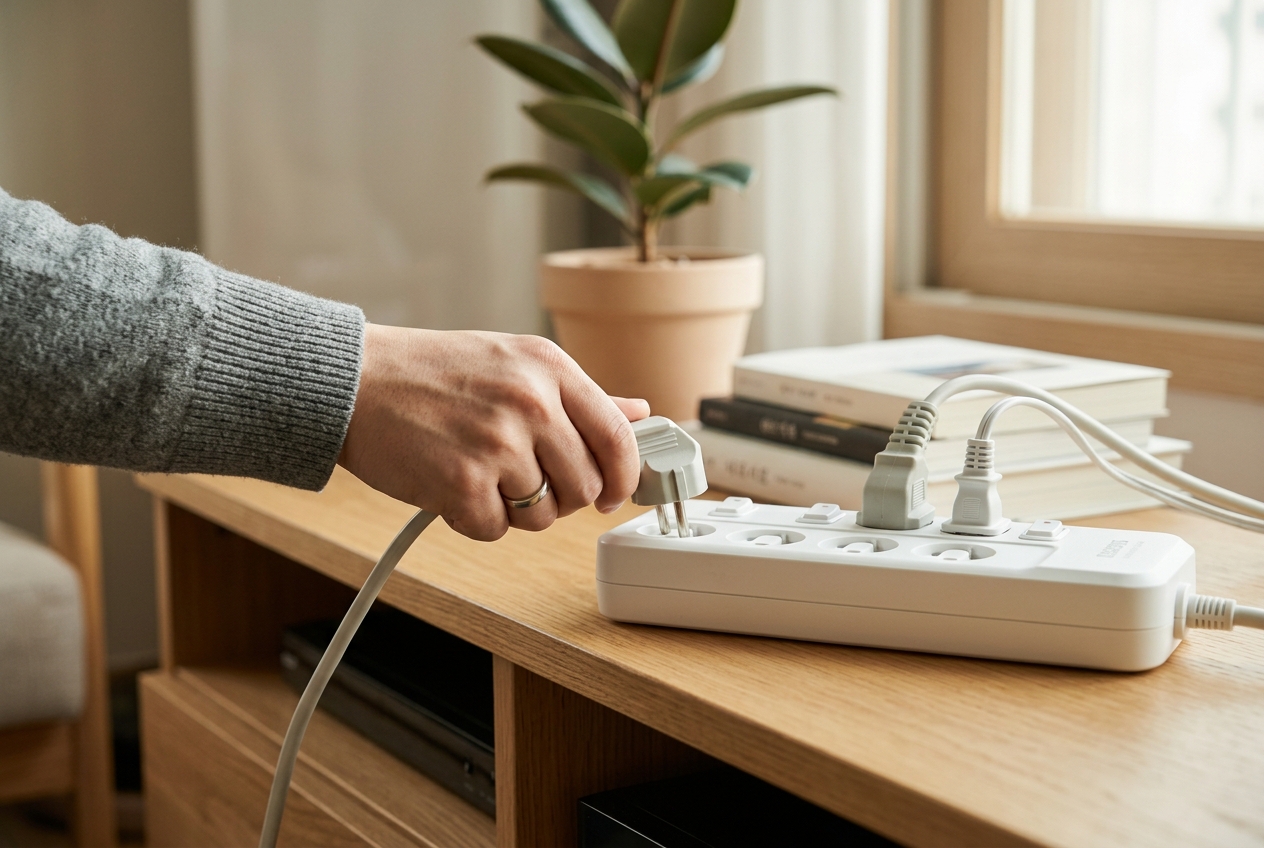
So-called 'daisy-chaining' refers to connecting one power strip to another, or plugging in devices until no empty slots remain. This goes beyond just looking untidy; it increases electrical resistance and causes heat generation. Devices connected at the end of a chain may experience voltage drops, which can lead to device failure. Above all, when multiple plugs are bundled together, heat cannot dissipate and concentrates in one spot, creating a high risk of damaging the insulation coating.
Also, the problem of poor contact cannot be ignored. Loose plugs can cause sparks, and if these sparks meet surrounding dust, they can instantly turn into flames. It is advisable to connect only one high-power device to a single power strip and place low-power devices like chargers in the remaining slots. The first step to fire prevention is the habit of unplugging unnecessary devices when not in use. In particular, serial connection, where multiple power strips are linked together, exponentially increases the risk of fire and should never be done.
To avoid daisy-chaining, you should optimize your usage environment. Consider the layout of your appliances when choosing outlet locations, and if you are short on outlets, consider installing additional wall outlets instead of adding more power strips. Also, rather than filling all the slots on a power strip, leaving at least one spare slot helps with heat dissipation, which is effective in physically suppressing heat. Do not forget that if you do not push the plug in all the way, the contact area decreases, causing resistance, which then turns into heat.
Safe product selection and buying guide
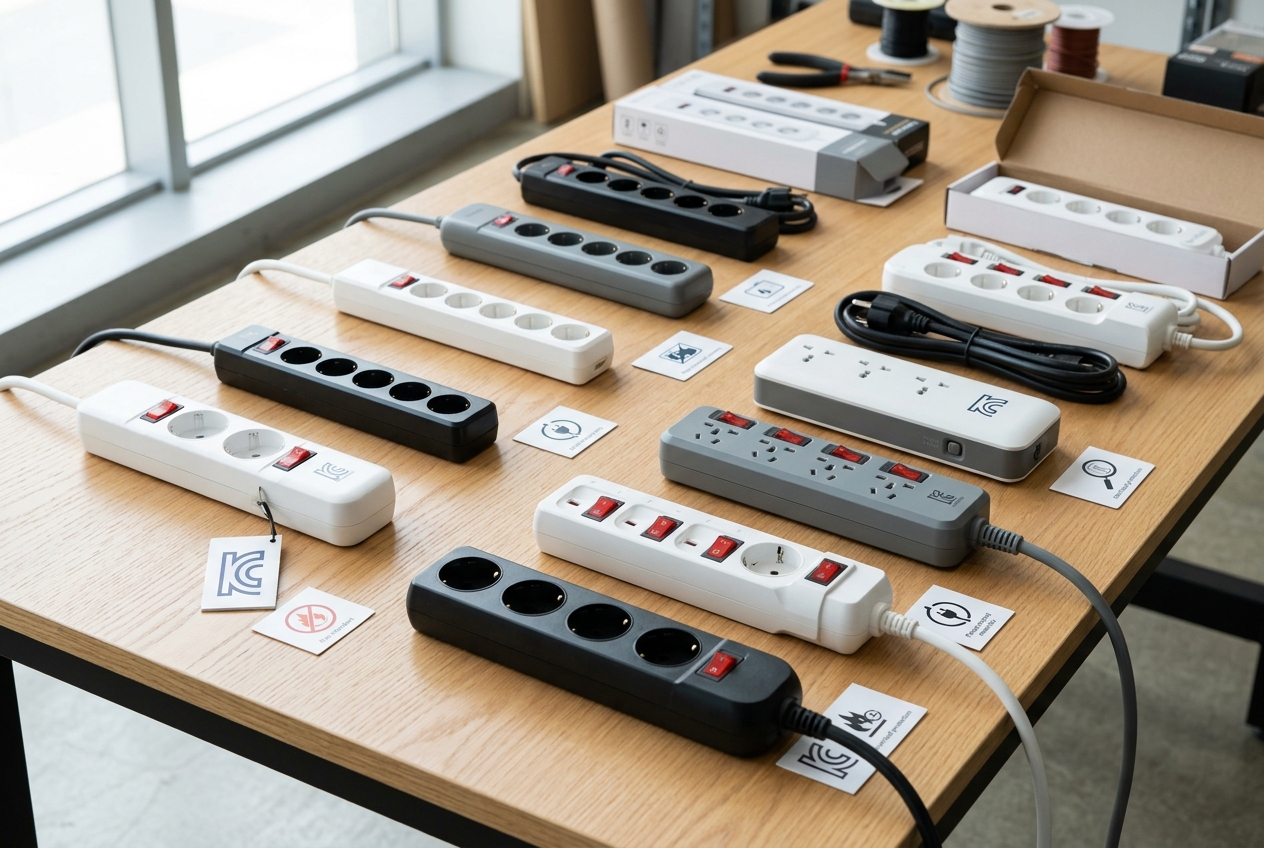
When choosing a power strip, checking for safety certification marks is more important than the price. In South Korea, you should purchase products with the KC certification mark. Also, check if the product includes an overload protection feature. Power strips with overload protection automatically cut off the power when current exceeding the allowed capacity flows, preventing accidents. This feature acts as a safety device that reacts immediately to excessive current.
The material is also important. Products made of flame-retardant materials delay the spread of flames in the event of a fire. Recently, products with individual switches have become popular, which are very helpful in reducing standby power by cutting off power to unused devices. However, since the switch itself could fail and fail to cut off power, it is a good habit to periodically press the switches to ensure they are working properly. Checking that the power strip's cord is thick enough is also a good method. Thin wires can easily overheat when using high-power appliances.
The selection criteria should be a clear distinction by purpose. It is recommended to use products with high-capacity cutoff functions for high-power appliances, products with individual switches for general office use, and built-in or slim products with clean designs for places where interior aesthetics are important. When purchasing online, it is also good to check the 'flame retardant rating' on the product detail page. Products made of polycarbonate material with excellent flame retardancy effectively prevent the spread of flames in the event of a fire.
Periodic cleaning and maintenance
Dust accumulated between the outlet and the plug is the main culprit for 'tracking phenomena.' Tracking phenomenon refers to a situation where moisture adheres to dust, allowing current to flow and causing sparks. To prevent this, you should remove dust from the power strip at least once every six months. Use a dry cloth or cotton swab to carefully wipe away dust between the plug and the outlet holes. Using a vacuum cleaner to suck up dust from the entrance is also effective.
If the plug is scorched black or you smell burning plastic, you should discard it immediately. This is a very strong signal that the internal terminals are likely already damaged. Also, if the power strip cord is stiff or the insulation is stripped, it should be replaced immediately. Electrical safety begins in places you cannot see. Using cable ties to organize cords so they don't tangle can prevent the cord from bending and protect it from external impact. In places with high humidity, choose waterproof power strips or products with covers to minimize contact.
A point to note when cleaning is that you must turn off the power and unplug the device before proceeding. Wet towels with moisture pose a risk of electric shock, so you must use a dry cloth or alcohol swab. Also, if you feel that the plug has become loose while periodically unplugging and replugging it, the metal terminals inside the power strip have stretched, so replace it with a new product immediately. This is because when the terminals stretch, the contact area decreases, causing severe heat generation.
Electrical safety rules to practice in daily life
Power strips are not permanent products. Usually, after about two years of use, internal components begin to deteriorate, so it is recommended to periodically replace them with new products even if there are no visible major defects. Also, it is safer to use power strips with waterproof functions or covers in bathrooms or near kitchens where there is high humidity. This is because if moisture gets in, the risk of electric shock is very high. In the kitchen, be careful not to let steam or oil generated during cooking reach the outlet.
Finally, fixing the power strip to the wall prevents the plugs from wobbling, which prevents poor contact. Power strips rolling on the floor are easily stepped on, causing the cords to bend or break. Using an organizer box to manage them neatly is a way to achieve both safety and interior design goals. Not placing flammable materials (paper, cloth, etc.) around the power strip is also an important point for fire prevention. Electrical safety starts with small actions. You need to adopt an attitude of recognizing power strips not just as tools for sharing electricity, but as key management targets for fire prevention. If you feel that the power strip is hotter than usual when you touch it, you should immediately disconnect all devices and inspect it. This is highly likely to be a precursor to an overload.
Frequently Asked Questions
What is the appropriate replacement cycle for a power strip?
Generally, 2 years is recommended. However, if there is visible discoloration, a burning smell, or the plug has become loose, it should be replaced immediately.
How should high-capacity appliances be connected?
It is safest to connect high-power devices such as air conditioners and heaters directly to a wall outlet without using a power strip. If you must use a power strip, use a high-capacity dedicated power strip.
Why is it dangerous if dust accumulates on a power strip?
If moisture gets into the dust, it can become a path for electricity to flow, causing sparks (tracking phenomenon), which is a direct cause of fire.
Can I connect multiple power strips together?
'Serial connection,' where one power strip is connected to another, maximizes the risk of overload and is strictly prohibited.