When summer arrives, many people struggle with the sticky humidity that accompanies the heat. It is not just the heat itself, but the moisture in the air that, when touching the skin, maximizes discomfort. Indoor humidity is an important factor directly linked to health, going beyond mere comfort, as it affects mold growth and the proliferation of dust mites. Today, we will look at the key steps to managing indoor humidity in summer that even beginners can easily follow.
Understanding the Basics of Summer Humidity Management: Why Is Humidity Important?
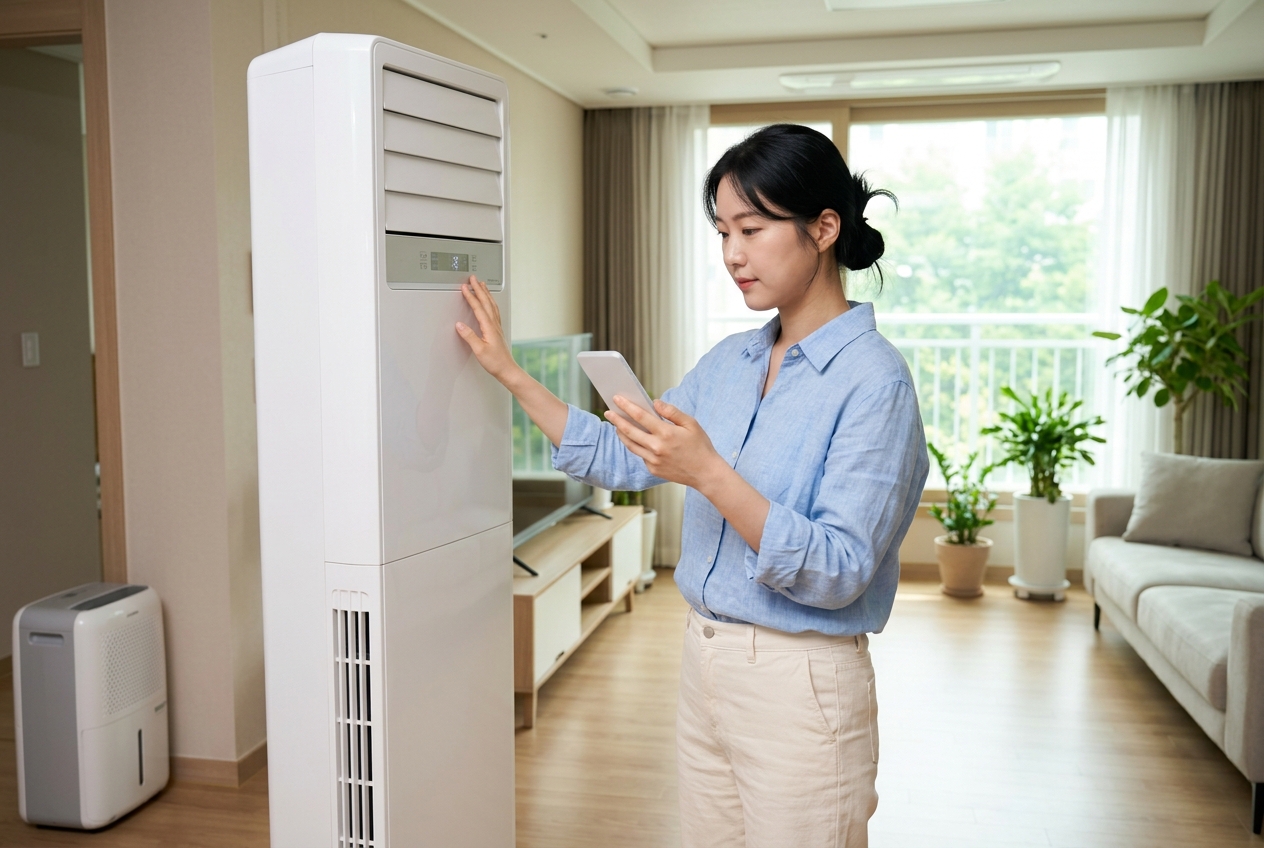
Generally, the optimal indoor humidity for summer is known to be between 40% and 60%. If the humidity exceeds 70% outside this range, an environment conducive to mold growth is created. High humidity makes it difficult to regulate body temperature, making the perceived temperature feel much higher than the actual temperature, which can also lead to air conditioning sickness or respiratory issues. Therefore, it is important to view the air conditioner not just as a tool for lowering the temperature, but as a device for controlling humidity.
When humidity is high, the human body struggles to evaporate sweat. Sweat needs to vaporize from the skin's surface to remove heat and lower body temperature; if there is too much moisture in the air, this process slows down, increasing discomfort. Furthermore, high humidity shortens the lifespan of indoor furniture and wallpaper and can trigger allergic reactions in children or the elderly with sensitive respiratory systems. Thus, managing humidity is an essential act of protecting your family's health, going beyond simple home environment improvement. Humidity management is a process of improving the overall air quality of the home and enhancing the quality of life for its residents, rather than just solving a numerical problem.
The First Step to Humidity Control: Using a Hygrometer
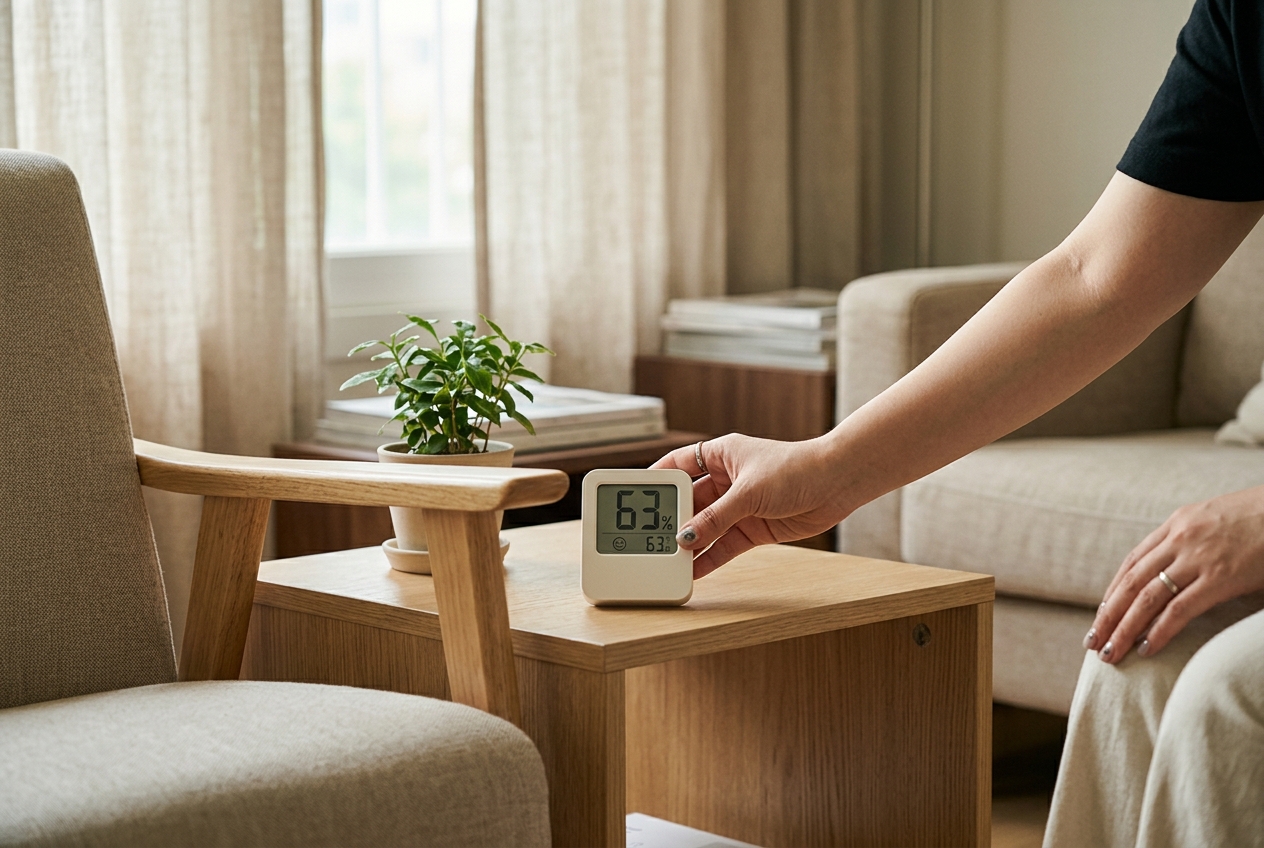
To manage humidity, you must first accurately know the current state. Rather than relying on intuition, purchasing an inexpensive digital hygrometer is a great help. It is best to place the hygrometer in the center of the room or in a place with good airflow. Once the humidity exceeds 65%, you should implement dehumidification measures.
Developing the habit of checking if the hygrometer reading exceeds 60% can help prevent mold growth in advance. Especially during the rainy season, use the changes in the hygrometer as a standard for deciding when to ventilate. It is advantageous to place the hygrometer in the center of the living room or near the head of the bed where air circulates evenly, rather than right next to a window or bathroom, to accurately measure the average indoor humidity. Check the battery level of the hygrometer periodically, and since errors can occasionally occur, comparing it with another hygrometer from time to time is a good way to increase accuracy.
Practical Strategies for Efficient Moisture Removal
The most reliable way to manage indoor humidity is to use a dehumidifier or the dehumidification mode of an air conditioner. However, simply running the machines blindly is not the answer. For efficient management, you need to respond according to the space and situation.
Checklist and Management Know-how by Space
The way you handle moisture should vary depending on the characteristics of each space. Check the status of your home through the following checklist:
- Bathroom: After showering, be sure to run the exhaust fan for at least an hour and leave the door open to vent moisture. Removing water from the floor with a squeegee can significantly shorten drying time. The habit of wiping away water to prevent mold between tiles is the most inexpensive and effective management method.
- Kitchen: Always turn on the hood and open a window while cooking to prevent steam from lingering indoors. In particular, the large amount of steam generated when making soups or stews is a primary cause for running a dehumidifier. It is recommended to leave the hood on for about 5 minutes after cooking to completely remove residual moisture.
- Closets and Drawers: Air circulation is poor inside closets, making it easy for moisture to accumulate. Periodically open the doors to ventilate and place dehumidifiers inside. It is best to store off-season clothes in compression bags to block moisture exposure at the source. Simply leaving the closet door open can circulate the stagnant air inside.
- Bedroom: Humidity rises during sleep due to human breathing and sweat. When you wake up in the morning, do not fold your bedding immediately; leave it spread out for a while to let the moisture evaporate. It is recommended to dry bedding on sunny days or use a clothing care system's dehumidification function. Placing a dehumidifying sheet under the mattress is also an option.
Checking these items daily can significantly reduce indoor discomfort. Especially during the rainy season, you should avoid drying laundry indoors. The moisture coming from a drying rack can instantly raise indoor humidity by more than 10%. If you must dry laundry indoors, place a dehumidifier near the laundry and use an air circulator together to increase the drying speed. Additionally, using an air circulator to create forced airflow when drying laundry can reduce drying time by more than half, minimizing exposure to moisture.
Natural Dehumidification Methods to Practice in Daily Life

In addition to mechanical dehumidification, you can control moisture using materials commonly found around you. This is especially useful in small spaces or places where it is difficult to place a machine.
How to Use Natural Dehumidifiers and Precautions
First, charcoal is an excellent natural dehumidifier. The tiny pores in charcoal absorb moisture and have an air-purifying effect. Placing charcoal in the corner of a shoe rack or closet can provide both moisture removal and odor deodorization. Charcoal can be reused semi-permanently by washing it in running water once a month and drying it thoroughly in the sun, making it a very economical method.
Second, using newspapers. Placing newspapers on the floor of a closet or inserting them between clothes is highly effective at absorbing moisture. Since the ink from the newspaper can stain clothes, avoid direct contact and consider layering thin paper in between. However, newspapers must be replaced periodically to prevent mold growth.
Third, coarse salt. If you put coarse salt in a container and place it in a damp area, the salt will absorb moisture and become soggy. At this point, the soggy salt can be dried in the sun or lightly heated in a microwave to be reused, making it economical. Also, drying coffee grounds and putting them in a mesh bag can provide both dehumidification and deodorization effects. Note, however, that coffee grounds can actually become a source of mold if not dried completely, so be careful. While natural dehumidifiers do not have the powerful performance of a mechanical dehumidifier, they show excellent efficiency as a supplementary means in small, enclosed spaces like closets or shoe racks. Do not forget that periodic maintenance and replacement are essential when using natural materials.
Proper Balance and Management Strategy for Ventilation and Air Conditioning
In summer, people often keep windows closed and only run the air conditioner. However, without ventilation, indoor carbon dioxide levels rise and the air becomes stuffy. On days when it is not raining, it is best to open the windows wide at least twice a day for 30 minutes to create a cross-breeze. Ventilation is the process of discharging indoor pollutants and replacing humid air with relatively drier air from outside.
Precautions and Management Tips When Using Air Conditioners
The process of drying the internal moisture with 'fan' mode before turning off the air conditioner is essential. If you do not do this, the dew that forms on the internal heat exchanger becomes a breeding ground for mold. Recent air conditioners have an automatic drying function, but if yours does not, make it a habit to run the fan mode for about 20 minutes. Also, cleaning the dust from the air conditioner filter once every two weeks increases cooling efficiency and optimizes dehumidification performance. This is because if the filter is clogged, air circulation is not smooth, making it easier for moisture to accumulate inside the unit.
You should also understand the difference between cooling and dehumidification modes. The main purpose of cooling mode is to lower the indoor temperature, while dehumidification mode focuses on condensing moisture in the air by setting a target humidity. On days with high humidity, dehumidification mode alone can provide sufficient comfort, which can also contribute to saving on electricity bills. However, when the indoor temperature is too high, cooling mode is more effective, so you need the wisdom to mix them appropriately depending on the temperature and humidity situation. Setting the indoor temperature too low when running the air conditioner can cause condensation due to the temperature difference between indoors and outdoors, so it is recommended to maintain an appropriate temperature of around 26 degrees Celsius.
Humidity management is not a short-term solution, but rather a result of small daily practices that create a comfortable environment. Especially during the rainy season, since external humidity is high, you need the flexibility to use a dehumidifier rather than forcing windows open, and to actively ventilate when the sun comes out. We recommend posting the checklist covered today on your refrigerator or door and practicing it with your family. Small efforts will add up to help you spend a healthy, moisture-free summer. Paying attention to indoor environment management is the first step to a healthy summer, especially when humidity is high.
Frequently Asked Questions
What is the optimal indoor humidity for summer?
Generally, 40-60% is considered the optimal humidity. Maintaining this range can suppress mold growth and provide a comfortable feeling.
Should I leave the windows open when using a dehumidifier?
It is more efficient to close the windows when using a dehumidifier. If humid air from outside continues to enter, it is difficult for the dehumidifier to perform at its best.
Why shouldn't I dry laundry indoors?
Because the moisture released as laundry dries rapidly increases indoor humidity. During the rainy season, it is best to use a dryer or dry it in a well-ventilated area.
Which is better, air conditioner dehumidification mode or cooling mode?
In terms of dehumidification efficiency, a dedicated dehumidifier is best, but the air conditioner's cooling mode is also effective at removing moisture by condensing and discharging it. Adjust according to the situation.