When the summer rainy season begins, unexpected problems often arise in homes. In particular, discovering a leak in a rental property can be incredibly distressing. It goes beyond just damp wallpaper, as it can damage furniture and home appliances. Today, we will walk through a step-by-step guide on how anyone can easily check for leaks in a rental home during the rainy season.
The Mindset to Have Before Visiting a Property

Usually, when visiting a house, people prioritize lighting, storage space, or transportation convenience. However, if the rainy season is approaching, checking for leaks should be your top priority. Do not be reassured just because the visible wallpaper looks clean. You cannot rule out the possibility that the landlord has applied a temporary layer of wallpaper to cover up issues. Therefore, it is helpful to visit with a meticulous mindset and a few tools. Carrying a small flashlight is very useful for checking for cracks or moisture inside dark furniture.
The most important thing is 'attention to detail.' Small stains or musty smells that you might normally overlook could actually be signs of a leak. Being on a high floor does not mean you are safe from leaks. Top-floor units are prone to leaks due to roof waterproofing issues, while lower-floor units can suffer from plumbing problems. It is better to check the space with an objective eye rather than blind trust. Beyond just looking at the layout, you should develop the habit of mentally mapping out the building's age and the path of the pipes. It is advantageous to visit during the day to use natural light to spot subtle curves or discoloration on the walls.
Full Leak Inspection Checklist: Ceilings and Walls
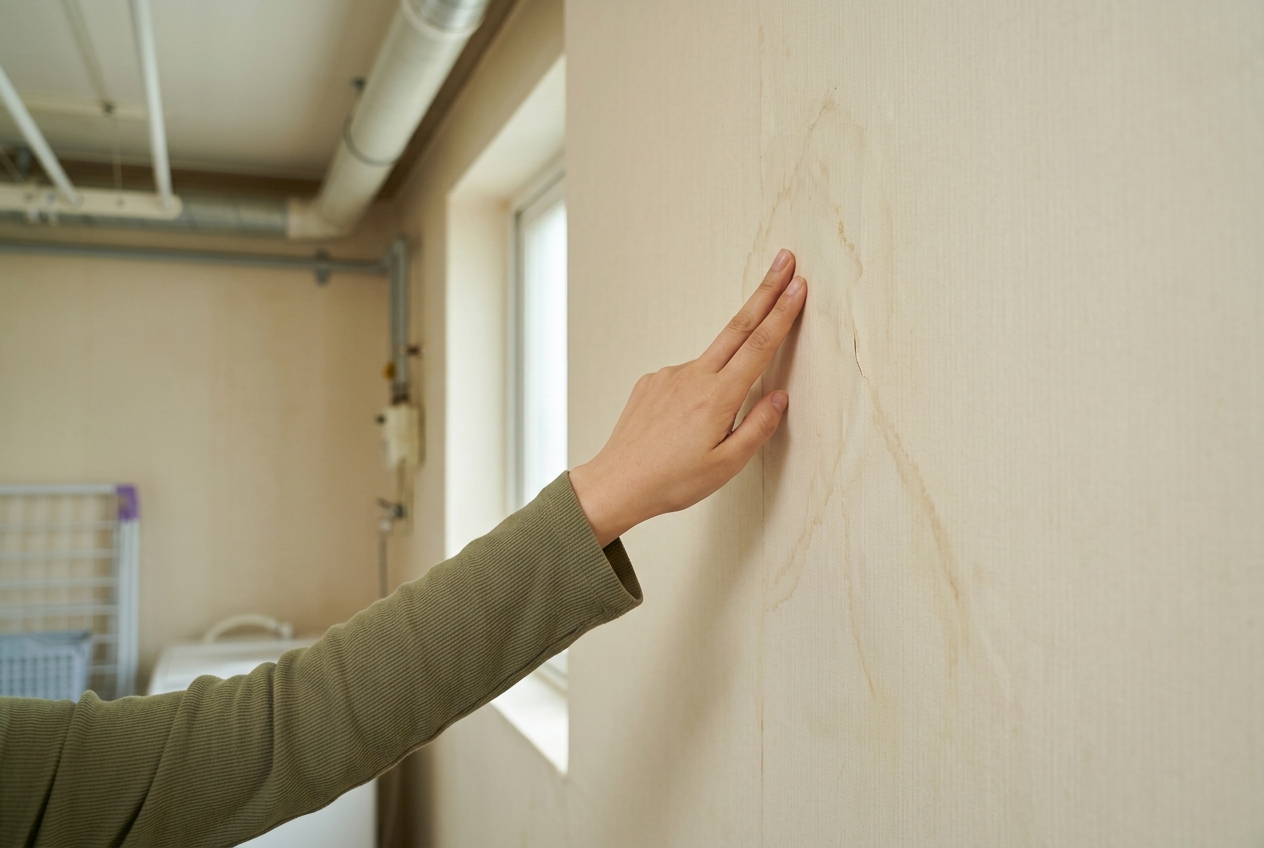
The first place to check is the ceiling. Pay close attention to areas that use a lot of water, such as bathrooms, kitchens, and utility rooms. If there are stains on the ceiling or the wallpaper is bubbling, it is highly likely to be a sign of a leak. It is important to distinguish between condensation and an actual leak. Condensation usually occurs on the corners of exterior walls during winter due to temperature differences and appears as black mold spots, whereas leaks leave distinct streaks where water has flowed. Discolored or yellowish ceiling wallpaper is a classic indicator of past leak history.
For walls, focus on the corners. If the wallpaper is slightly peeling or has a different color, it is a sign that moisture is trapped behind it. If it feels damp when you touch it, immediate verification is needed. Also, look closely at the wallpaper to see if there are signs of it being layered over existing wallpaper. If a specific area looks unusually clean or has a slightly different color, it might be intended to hide previous leak marks. It is safer to ask the landlord directly about past repair history. Furthermore, if the wall feels spongy when pressed or emits a moldy smell, there is a high probability that the internal wall structure is already rotting from moisture.
Checking Plumbing in the Kitchen and Bathroom
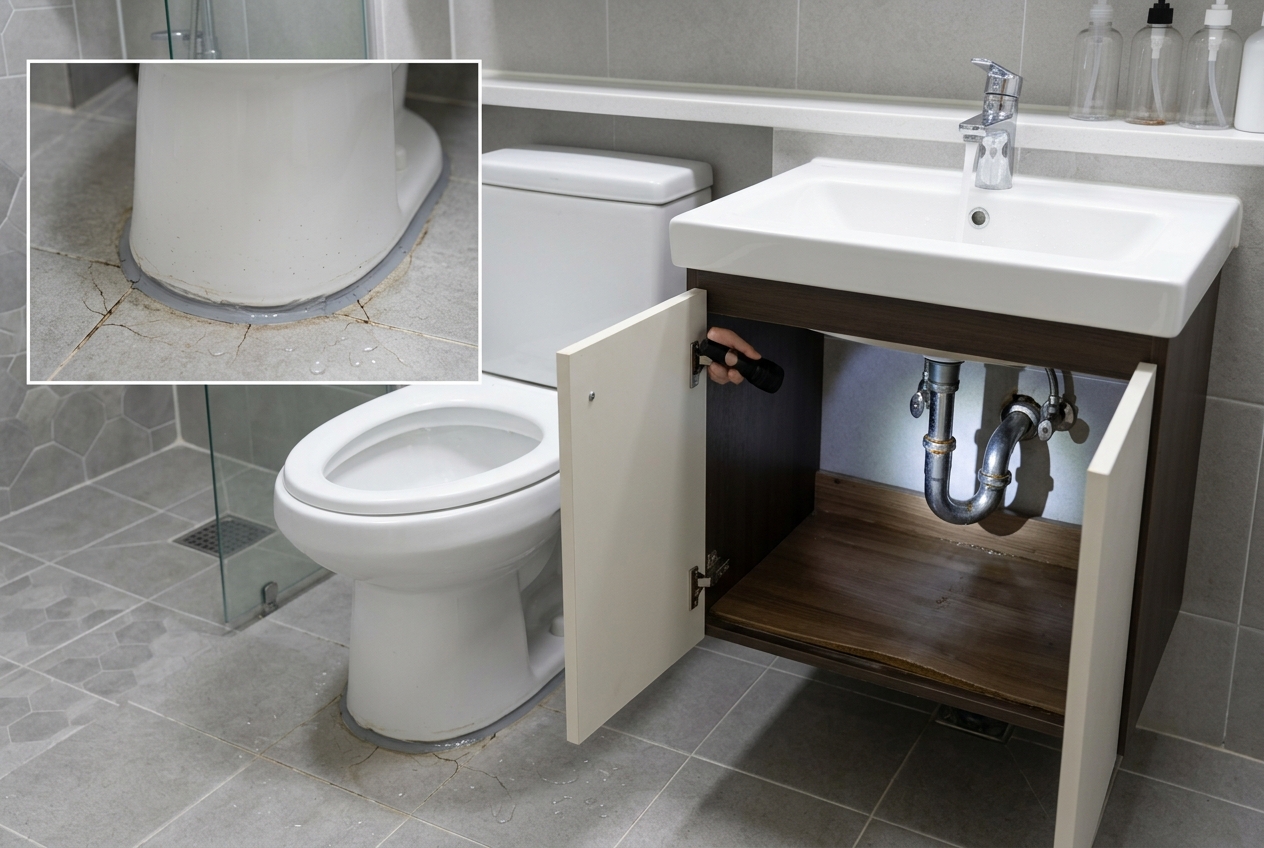
Many tenants overlook the space under the kitchen sink. Because the area under the sink is dark and damp, it is difficult to notice leaks even if they occur. Open the cabinet, run your hand along the bottom, or check the condition of the pipes around the drain. If water droplets are forming at pipe connections or if there is rust, these are clear signs of a leak. Also, if the wooden base of the cabinet is swollen, it is evidence that water has been leaking continuously. It is essential to turn on the faucet and drain a large amount of water at once to see if any water forms at the pipe connections.
The same applies to the bathroom. Check around the toilet, under the sink, and the grout condition of the shower booth tiles. If tiles are cracked or grout is missing, water can seep through the gaps and cause leaks in the unit below. This is a serious matter that can lead to disputes between neighbors, beyond just being an inconvenience to the tenant. Turn on the water to see if it drains smoothly and if the sound of the water draining is normal. Check for leaks in the trap under the sink and ensure the silicone seal at the base of the toilet is not peeling. It is also important to check if water on the bathroom floor flows smoothly into the drain. If the floor slope is incorrect and water pools, it can seep through tile gaps and cause leaks.
Checking Windows, Verandas, and External Infiltration
One of the main culprits of leaks during the rainy season is the window frame. If the silicone around the window frame is old and cracked, rainwater will flow into the room every time it rains. This is a major cause of damage to wallpaper and warping of wooden floors. If there is mold on the wallpaper around the window frame, you should suspect a leak from the frame. In the case of expanded apartments, window frame leaks can spread damage to the entire living room, so you must be extra careful. It is best to visually check if there are gaps outside the window frame and if the silicone is peeling or loose.
Do not overlook the veranda. If the paint on the veranda wall is peeling or there is a white powdery substance (efflorescence), it is evidence of high internal humidity. Pay close attention to the area around the floor drain where the washing machine is placed. If water is pooling or the drain is clogged, there is a risk of backflow during heavy rain. It is also a good idea to open and close the veranda window to see if the structure allows rainwater to pool at the bottom of the frame and check if the drainage holes are blocked. If the drain does not work properly, there is a risk of the entire veranda flooding during heavy rain. If there are stains near the corners of the veranda ceiling, it is likely a waterproofing defect in the unit above, so check this carefully as well.
How to Respond and Precautions When Signs of Leaks Are Found
What should you do if you find signs of a leak while viewing a house? You don't necessarily have to give up on the contract. First, clearly notify the landlord or the real estate agent about your findings. Ask, "I see these marks; will there be any issues during the rainy season?" and confirm if there is a repair plan. A verbal promise to "fix it" is a major source of future disputes. You must set a clear deadline for the completion of repairs and make it a condition that you will re-inspect the property after the repairs are finished.
It is recommended to specify in the contract that 'repairs for pre-move-in leaks must be completed' or define 'the landlord's scope of responsibility for leaks occurring after move-in.' Also, since leaks can be natural but are often caused by poor maintenance, it is wise to establish a communication channel with the landlord in advance. Tenants have an obligation to notify the landlord immediately when a leak occurs, and if you neglect it and the damage worsens, you may be held partially liable. Therefore, leaving evidence is more important than anything else. As soon as you discover a leak, take photos and videos, and notify the landlord through a recordable method such as a message or email.
Practical Final Checklist
Finally, before signing the contract, it is a good idea to visit again on a rainy day. Leak points that were not visible on a sunny day will become clearly apparent when it rains. Politely ask the real estate agent, "I would like to check if there are any leaks when it rains." If the weather is clear, simply running plenty of water in the bathroom to check for drain backflow or poor drainage can help identify potential leak risks. Also, discreetly asking neighbors about the building's leak history is a practical way to get information.
In conclusion, a leak is one of the most stressful defects to experience while living in a home. Checking thoroughly before signing a contract can prevent much of the inconvenience you might face later. Use the checklist we covered today—moldy smells, wallpaper stains, window frame silicone condition, and drain status—to protect your future home. If serious signs of leaks are found, you may need to seek professional help or make the decision to delay the contract until repairs are completed. The comfort of your living space is directly linked to your health, so do not ignore even minor signs and take active measures.
Since leak issues can lead to legal disputes, it is very helpful to familiarize yourself with the landlord's duty to repair under the Housing Lease Protection Act. According to Article 623 of the Civil Act, the landlord has an obligation to hand over the property to the tenant and maintain it in a state necessary for use and profit during the term of the contract. In other words, leaks caused by structural defects are naturally the landlord's responsibility. Develop the habit of inspecting the house a little more carefully for a safe and comfortable living environment. Defects discovered at the time of the contract are much easier to handle than those repaired after moving in. Actively use special clauses in the contract to protect your rights as a tenant. It is also worth remembering that if you cannot live in the property due to delayed leak repairs, it can be grounds for terminating the lease. Prepare in advance and check thoroughly to ensure a safe contract without damages.
Frequently Asked Questions
How can I distinguish between a leak and condensation when viewing a house?
Condensation usually occurs due to temperature differences in winter and often appears as black mold spots. On the other hand, leaks are characterized by streaks where water has flowed, damp wallpaper, and a strong musty smell.
What should I do if I find signs of a leak before signing the contract?
Notify the landlord and confirm the repair plan. Rather than a verbal promise, it is important to specify 'completion of repairs before move-in' in the special clauses of the contract to prevent future disputes.
Is there a way to check for leaks even on days when it is not raining?
Open the cabinet under the sink to check for water droplets or rust on pipe connections, and lightly touch the inside of the wallpaper to check for dampness. Also, simply checking if the bathroom tile grout or window frame silicone is aged provides sufficient preventive effect.
Who pays for the costs if a leak is discovered after moving in?
Generally, the landlord is responsible for repair costs for leaks caused by structural defects or aging pipes. However, since damage caused by the tenant's negligence is the tenant's responsibility, it is recommended to record the condition of the property with photos or videos immediately upon moving in.