Key Summary of Regular Korean Stock Market Trading Hours
What is a single-price auction and why is it important?
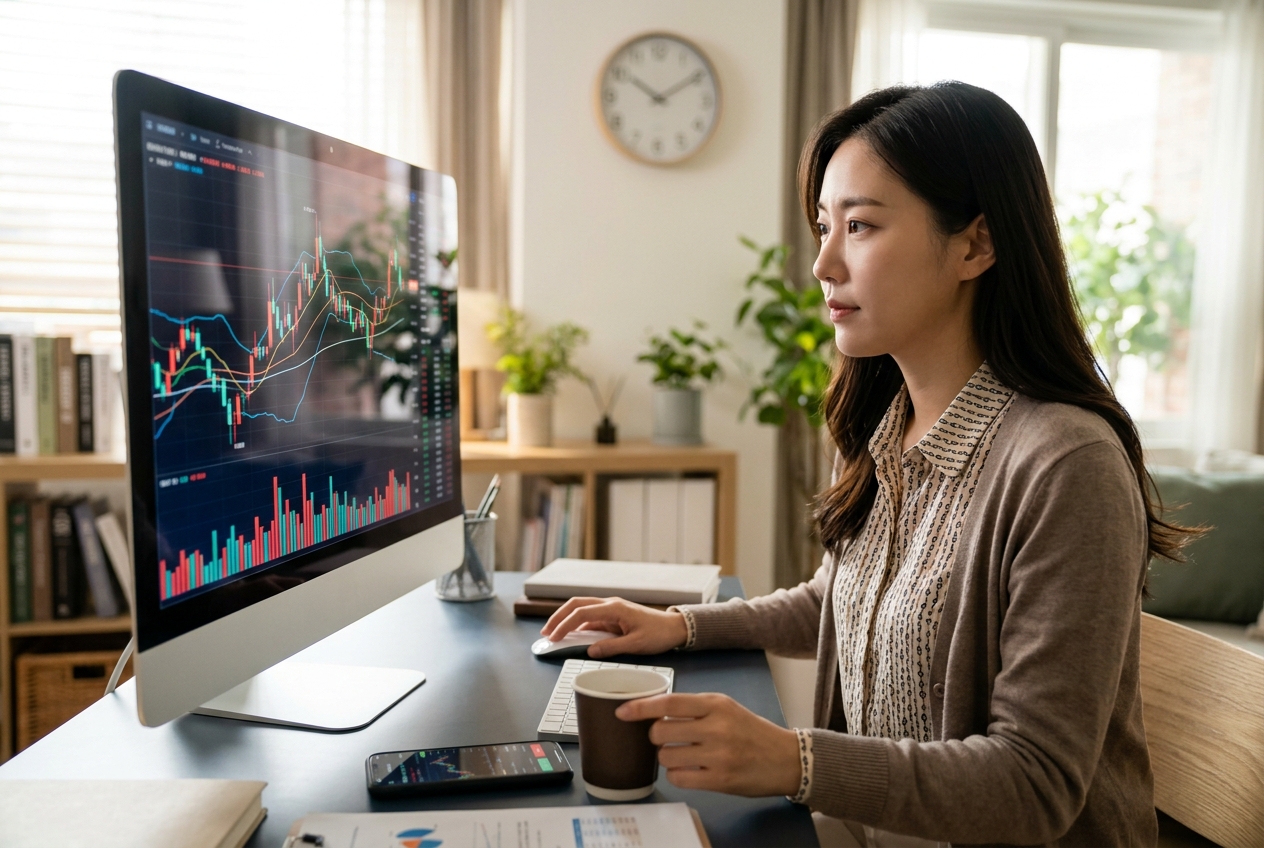
Single-price auctions take place from 8:30 AM to 9:00 AM and from 3:20 PM to 3:30 PM. During these times, orders are not executed immediately; instead, trades are concluded at the price where the most orders are concentrated at the time of market opening or closing. Since this is a mechanism to mitigate sudden volatility at the start of the day and derive a fair price, you must carefully observe the flow during these auction times to understand the trend immediately after the market opens. The pre-market single-price auction (08:30–09:00) is a gauge to estimate how global issues that occurred the previous night will be reflected in our market. Conversely, the closing single-price auction (15:20–15:30) determines the closing price of the day, which also affects the opening price of the next day. Therefore, if you are a short-term trader, you need to precisely analyze the changes in order volume during these times. Although prices appear to be changing constantly during auction times, these are only 'expected execution prices,' and actual trades are processed in bulk at a single price at exactly 9:00 AM and 3:30 PM.Points to note during regular trading hours
During regular trading hours, prices fluctuate in real-time, and orders are executed immediately. It is important to remember that the Korean market does not close for lunch. Unlike some overseas markets, trading in Korea continues without interruption from 9:00 AM to 3:30 PM, so you should always keep in mind the possibility of sudden supply and demand changes during lunch hours. During the day, there are times when the order book collapses in an instant when large sell or buy orders pour in. Especially when using market orders, you must consider this volatility to prevent slippage. Investors who prefer real-time execution are required to be cautious by checking the depth of the order book and calculating the impact their order size will have on the market. Additionally, you should be aware that market stabilization measures such as circuit breakers or sidecars that occur during regular hours can also affect trading times. Since trading can be temporarily suspended when the market overheats or plummets, investors should always keep a close eye on exchange announcements.How should you utilize after-hours trading?
What is after-hours single-price trading?
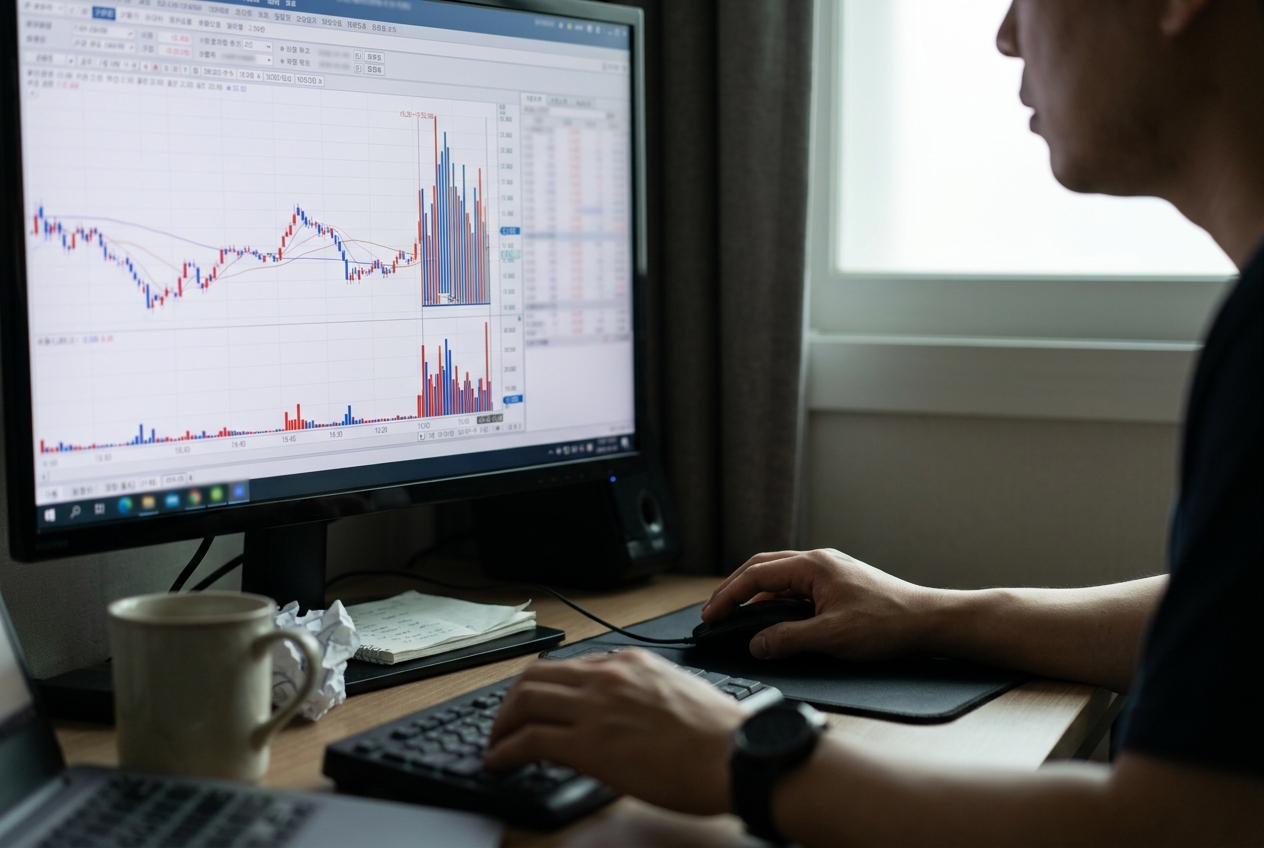
From 4:00 PM to 6:00 PM, after-hours single-price trading takes place. This is a method where single-price orders are collected and executed every 10 minutes, and the price can be determined within a ±10% range of the day's closing price. Many investors use this time to secure stocks they failed to buy during the regular session or to respond to issues that arose after the market closed. However, you must be aware that trading volume may be lower than in the regular session. In after-hours single-price trading, the bid-ask spread can widen significantly if trading volume is low. For this reason, if you bid too high or too low when buying or selling, there is a risk of execution at an unexpected price. It is necessary to develop the habit of checking market liquidity and submitting orders carefully.Trading Hour Checklist for Investors
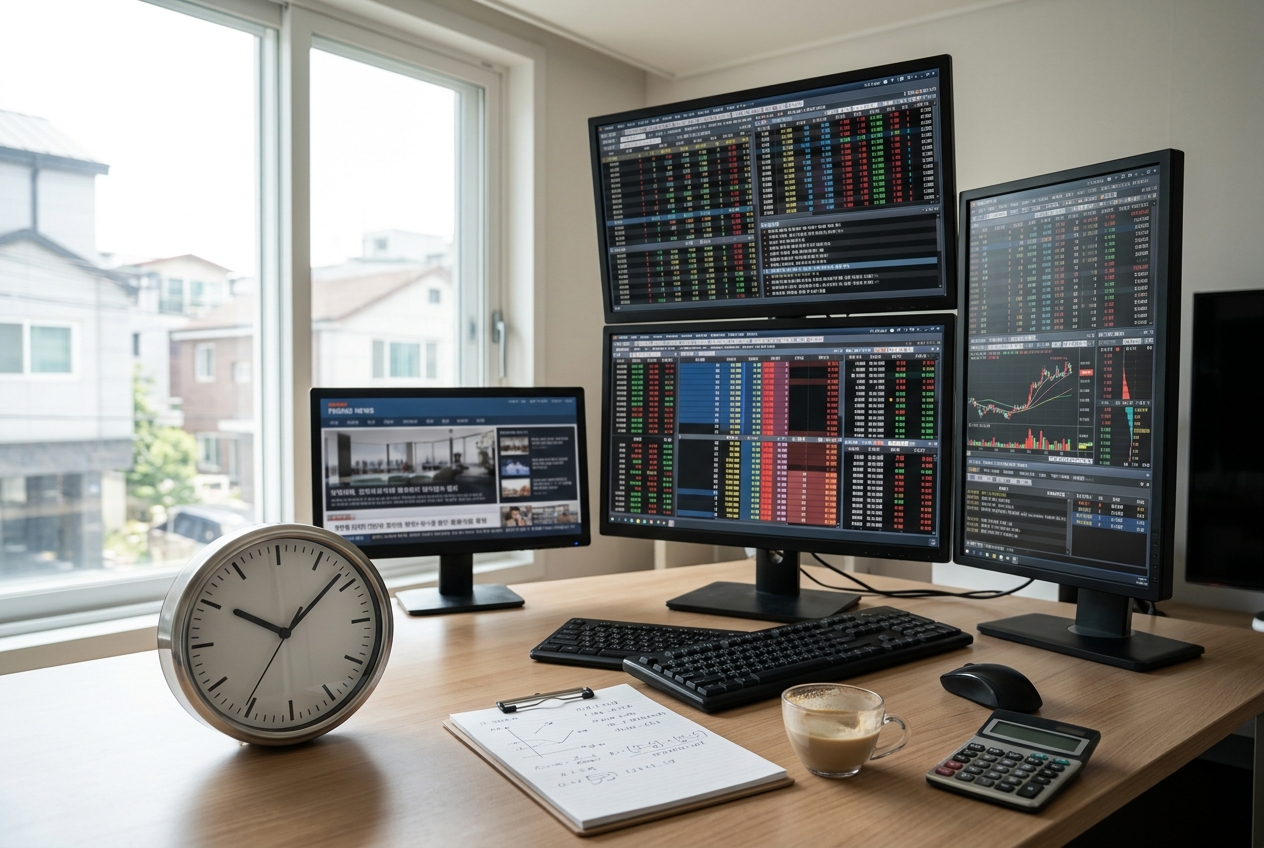
- Before market open (08:30–09:00): Understand the single-price auction flow that determines the day's opening price.
- During the day (09:00–15:20): Check supply/demand changes and the movement of major theme stocks in real-time.
- Before market close (15:20–15:30): Check the changes in buy/sell volume during the closing price determination process.
- After market close (15:30–18:00): Adjust your portfolio or take additional actions through after-hours trading.
Frequently Asked Questions about Trading Hours
We have summarized issues related to Korean stock market trading hours that many people are curious about. Since market conditions may change according to institutional changes, it is necessary to have a habit of always checking official exchange announcements.Is stock trading possible during lunch hours?
Yes, the Korean stock market operates normally from 9:00 AM to 15:30 PM without a lunch break. Therefore, real-time trading is possible even during lunch hours.Is trading not possible on holidays or weekends?
Saturdays, Sundays, and public holidays are designated as non-trading days for the Korea Exchange, so stock trading is not possible. It is recommended to check the calendar in advance for holiday periods or substitute holidays.How do I use reservation orders?
You can use the reservation order function so that if you place an order before the regular session starts or on a non-trading day, it will be processed with priority as soon as the market opens. However, since the setting method for reservation orders may vary depending on the brokerage system, please familiarize yourself with the functions of the brokerage app you are using in advance.Is after-hours trading possible for all stocks?
Most stocks support after-hours trading, but it may be difficult to execute trades for stocks with extremely low trading volume. Also, since after-hours trading forms a separate order book from the regular session, it is safe to check the price fluctuation range in advance when trading. Accurately understanding and utilizing Korean stock market trading hours is the first step to increasing your investment returns. Open the brokerage app you use right now and check for yourself when today's market closing time is and where the after-hours single-price trading menu is located. The better you know the rules of the market, the more relaxed your investing will be.Frequently Asked Questions
What are the regular trading hours for the Korean stock market?
The regular trading hours for the Korean stock market are from 9:00 AM to 3:30 PM.
Can I trade stocks during lunch hours?
Yes, the Korean stock market continues to operate from 9:00 AM to 15:30 PM without a lunch break, so you can trade at any time.
What is after-hours single-price trading?
It is a trading method where single-price orders are collected and executed every 10 minutes from 4:00 PM to 6:00 PM. Prices can be determined within a ±10% range of the day's closing price.
Why is the single-price auction necessary?
It is operated to prevent orders from flooding in at once at the start and end of the market, and to reduce price distortion by collecting orders at a specific point in time and executing them at a single price.