What is the first safety device that comes to mind when a fire occurs? Many people think of fire extinguishers, but the key to ensuring the safety of large spaces or entire buildings is the sprinkler installed on the ceiling. A sprinkler is an automatic fire extinguishing system that automatically detects heat in the early stages of a fire and sprays water to minimize damage. While it may look like a simple machine that sprays water, it contains sophisticated physical principles and strict legal standards.
Those encountering sprinklers for the first time often wonder how these devices detect fire and operate on their own. Today, we will take a step-by-step look at the basic operating principles of sprinklers and how we should manage and be cautious of them in our daily lives, from a beginner's perspective.
The Scientific Principles of How Sprinklers Operate
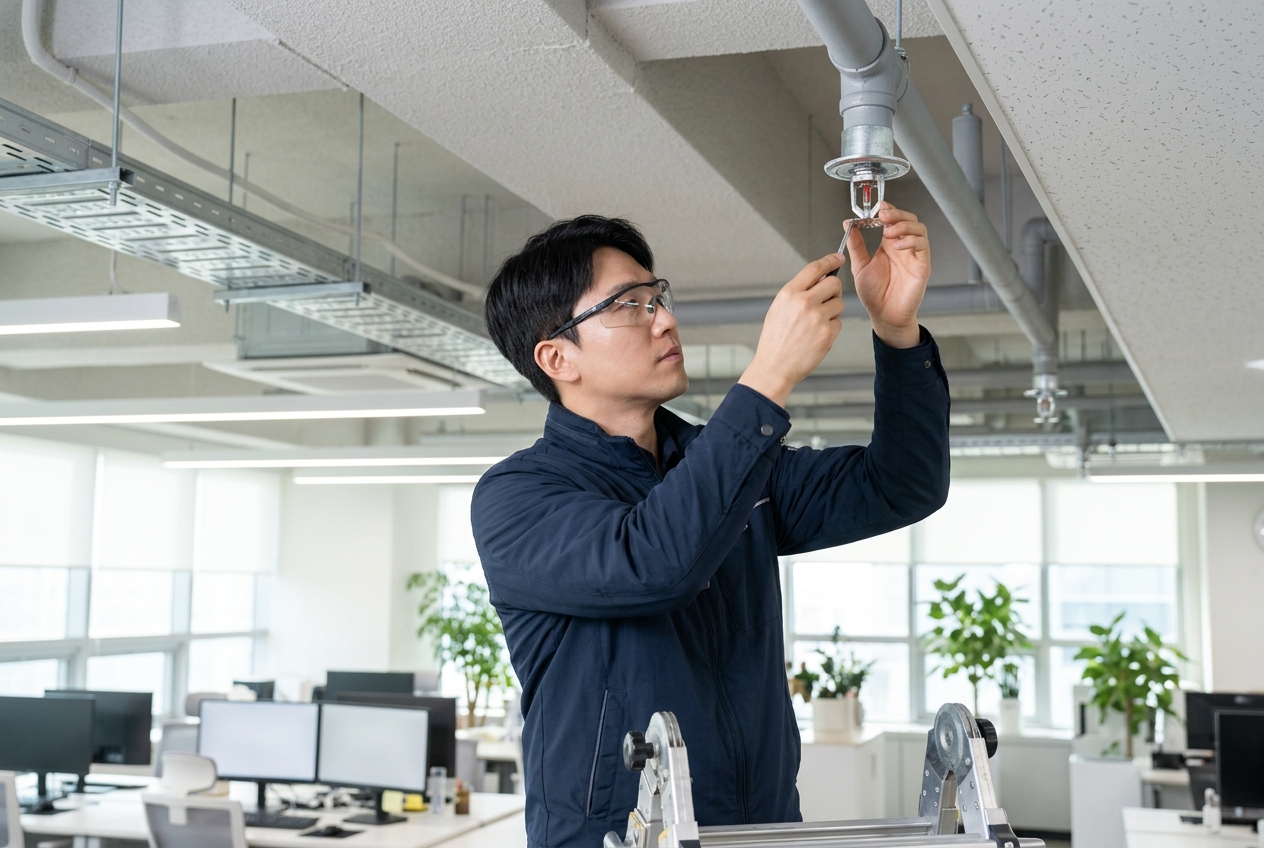
A sprinkler head is not just a hole where water comes out. The core of this device lies in a component called a 'heat-sensitive element.' At the end of the sprinkler head, there is a special glass bulb or a fusible link, which normally keeps the pipe tightly sealed to prevent water from leaking. When a fire occurs and the surrounding temperature rises above a certain point, this heat-sensitive element breaks or melts, allowing pressurized water in the pipe to spray out. This process is highly reliable because it occurs physically without the need for electricity.
In other words, only the head at the point of the fire opens to spray water, preventing the entire building from being flooded and focusing fire suppression efforts only on the area where the fire occurred. This method is both economical and the most efficient strategy to prevent the spread of fire. Depending on the type of heat-sensitive element, the operating temperature is also set, and it is precisely manufactured to induce an immediate reaction in case of fire. In addition to physical heat detection methods, pre-action systems that open valves in conjunction with fire detectors are also widely used recently. This design is intended to minimize water damage caused by malfunctions and is mainly used in public facilities or data centers where water-sensitive equipment is present.
Differences According to Installation Targets and Types
Not every building has the same type of sprinkler installed. Legal installation standards vary depending on the building's purpose, number of floors, and area. For example, in residential facilities like apartments, sprinkler installation is mandatory from relatively low floors for the safety of residents. On the other hand, for general commercial buildings or warehouses, installation is determined based on fire risk and the type of combustible materials.
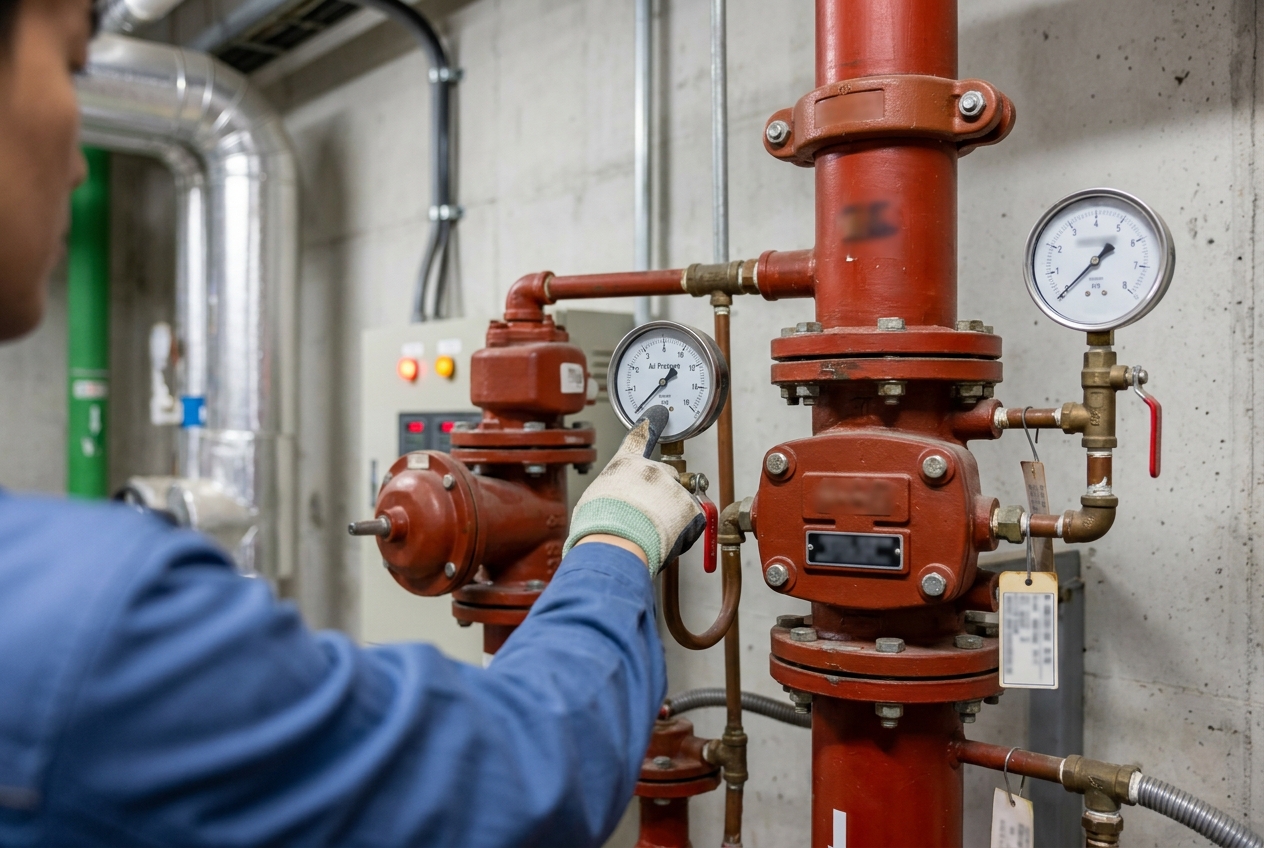
There are also various types of systems. There is the 'wet pipe' system where water is always filled inside the pipes, the 'dry pipe' system where air is filled instead of water and water fills the pipes during a fire, and the pre-action system. Dry or pre-action systems are used in places where there is a risk of pipes freezing in cold winters. While this classification is in the realm of experts, it is very helpful for residents or managers to know which method is applied to their building. The wet pipe system is the most widely used because it allows for immediate water discharge, while the dry pipe system is specialized for parking lots or spaces frequently exposed to outside air where there is a risk of freezing. Each system is managed through an alarm valve that detects pressure drops, and it is good to keep an eye on how the pressure gauge reacts whenever the pump operates.
Sprinkler Management and Inspection Checklist
For sprinklers to operate when needed, routine maintenance is more important than anything else. The following are items that managers must check:
- Are there any items piled up around the heads? (Obstacles within a 60cm radius are prohibited)
- Are the heads covered with thick paint or dust?
- Are there any leaks in the pipes?
- Is the control panel sounding an alarm or displaying an error message?
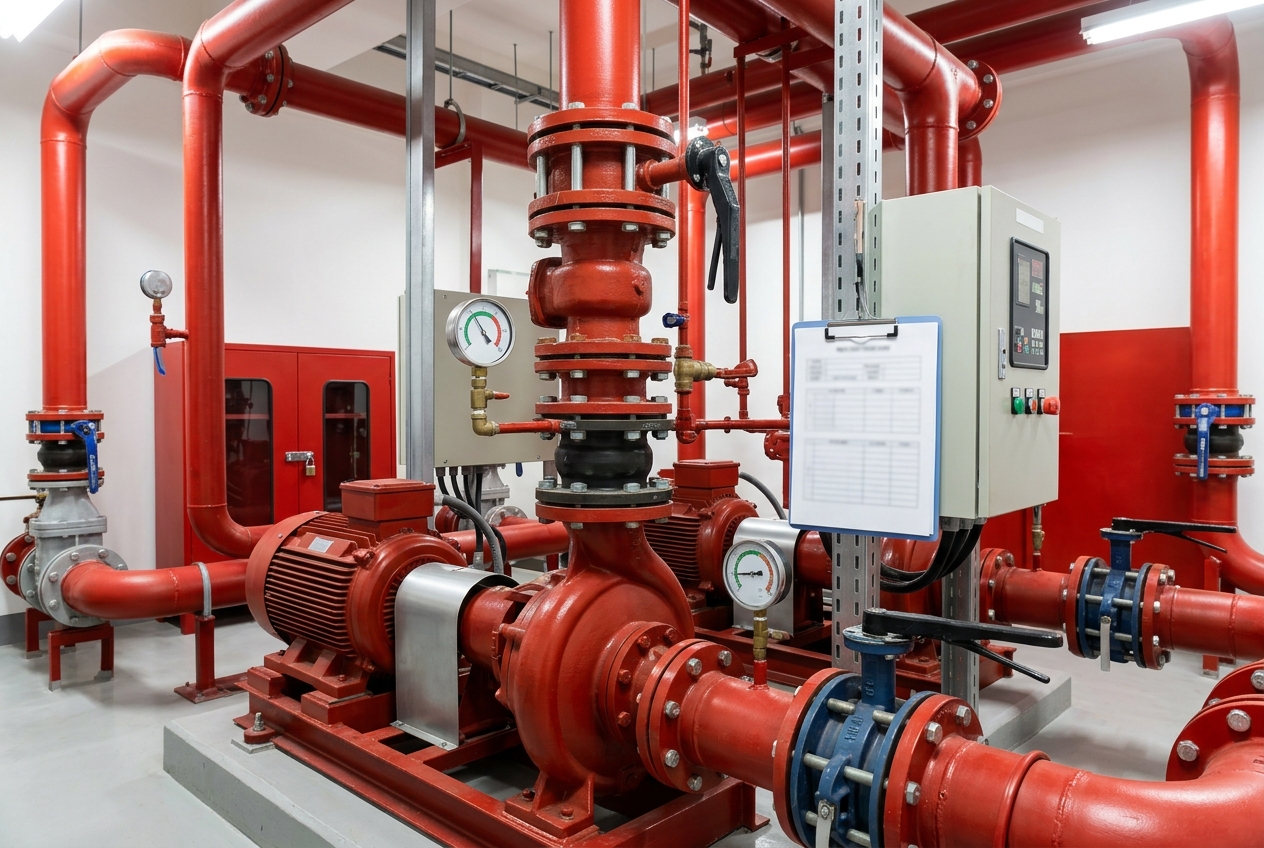
- Is the pressure gauge in the fire pump room within the normal range?
- Is the head deflector (water distribution plate) bent or damaged?
- Has the automatic start of the fire pump been verified for emergencies?
- Is the locking device of the valve box normal, and is the valve always in the open state?
This checklist is an essential preventive measure that not only extends the life of the facility but also helps the equipment perform its function during an actual fire. In particular, maintaining the pressure in the pump room is like the heart of the entire system, so managers should periodically record pressure readings and detect signs of abnormality early. It is recommended that managers prepare and record a fire facility inspection sheet at least once a month, which is the absolute basic of fire safety management.
Precautions for Sprinklers Often Overlooked in Daily Life
The most common mistake is to mistake a sprinkler head for an interior decoration item or to use it for storage purposes. Installing high shelves or hanging clothes around the head is very dangerous. This is because if a fire occurs, water needs to spread in all directions, but obstacles will drastically reduce the fire suppression range. Also, if you touch and damage the head, water may suddenly pour out and cause significant damage, so you should never touch it yourself.
In particular, when moving furniture or placing tall furniture, people often do not consider the distance to the head. Securing a minimum clearance of 60cm is the minimum safety distance to protect lives, regardless of legal standards. Caution is also needed when painting. If paint gets on the head, the heat detection function may be impaired, and it may not operate during an actual fire. If you are undergoing interior construction, you must work with a professional fire protection company to protect or replace the heads. Acts of arbitrarily covering the heads or excessively concealing them in a recessed manner during interior work can also reduce operational efficiency and should be avoided. If the head is already covered with paint or foreign substances, this is a direct cause of performance degradation and should be replaced immediately through a fire facility management company.
How to Respond in Case of Fire and Safety Awareness
The fact that a sprinkler has activated is a signal that a fire has already occurred. The most important thing at this time is to evacuate without panicking. Sometimes, when a sprinkler goes off, people think it is a 'malfunction' and leave it alone, but this is a very dangerous judgment. If the equipment has activated, you must evacuate immediately and report it to the fire department. Keep in mind that sprinklers are designed more for 'preventing spread and buying time' than for 'completely' extinguishing a fire.
Also, if you hear the sound of the fire pump operating, do not panic and move quickly out of the building through the emergency exit. Sprinklers are grateful devices that secure your escape time. Our fire response capability is greatly improved just by knowing the location of fire facilities and keeping them free of obstacles. Since visibility may be obscured when water pours out during a fire, do not forget the principle of evacuating in a low posture while covering your nose and mouth with a wet towel. If you must pass through a fire scene where a sprinkler is operating, it is best to move quickly with a wet blanket or a thick coat over your head. The water discharge from a sprinkler is greater than you might think, so be careful of slipping during evacuation, and it is essential to use the stairs to evacuate to the ground level, never the elevator.
The Importance of Regular Professional Inspections
In addition to daily inspections by individuals, professional inspections of fire facilities are legally mandated. Through operational function inspections and comprehensive precision inspections, the performance of pumps, the corrosion status of pipes, and the operation of detectors are checked in detail. The management entity must faithfully report the results of these inspections and immediately repair any pointed-out issues. Since fires occur without warning, please remember that thorough preparation is directly linked to life.
During inspections by professional companies, qualified personnel such as fire facility managers visit the site to carefully examine the system for pressure loss, the open/close status of valves, and the normal operation of alarm valves. If the inspection results confirm pipe aging or pump performance degradation, a replacement and repair plan should be established immediately. This is not just an administrative procedure, but a process of building a safety net where all residents of the building can live with peace of mind. In conclusion, the sprinkler is the most reliable fire guardian around us. If you understand the operating principles, keep the surroundings clean, and do not neglect regular inspections, you can sufficiently create an environment safe from fire. Why not take a look at the sprinkler head on the ceiling of your home or office starting today and check if there are any obstructive objects around it? Small actions are the first step to preventing major accidents.
Frequently Asked Questions
Why should I not place objects around the sprinkler head?
Sprinklers need to detect heat and discharge water, but if there are obstacles nearby, they interfere with the spread of water, drastically reducing fire suppression efficiency. As a rule, do not place objects within a 60cm radius around the head.
What should I do if a sprinkler suddenly bursts?
If a head is damaged or water is pouring out due to a malfunction, immediately contact the management office to stop the fire pump and block water from nearby appliances. Afterward, you must call a professional fire protection company to replace the head and check the condition of the pipes.
What happens if paint gets on the sprinkler head?
If paint gets on the heat-sensitive element of the head, it may not properly detect the heat generated during a fire, causing a delay in operation or failure to operate at all. This is very dangerous, so if paint has gotten on it, it should be replaced immediately.
Must all buildings be equipped with sprinklers?
No. They are mandatorily installed only in buildings that meet the installation standards according to fire-related laws, such as the building's purpose, number of floors, and area. Buildings that are small in scale or depending on their purpose may be excluded from the installation requirement.