When faced with a sudden high fever, unbearable abdominal pain, or an unexpected accident, it is natural to feel flustered. The first place that comes to mind is the emergency room, but hesitation often follows: 'Is this symptom serious enough to go?' Because the emergency room is dedicated to prioritizing patients with life-threatening conditions, making an informed decision based on your symptoms is crucial.
In this article, we will outline the criteria for distinguishing between situations that require an emergency room visit and those that do not, as well as the essential items you should prepare before arriving. This will help you reduce unnecessary waiting times and ensure you receive appropriate medical care.
How to Distinguish Between Emergency and Non-Emergency Situations?

The emergency room is, by definition, a space for 'emergency' patients. Medically, an emergency situation refers to a state where, without immediate intervention, there is a risk to life or a high probability of serious physical damage. Examples include cardiac arrest, respiratory distress, massive bleeding, or suspected stroke. Conversely, minor exacerbations of chronic diseases or mild pain that has persisted for several days are more efficiently handled through outpatient care for both the patient and the medical staff.
Generally, the following symptoms are key indicators that you should consider an emergency room visit:
- Sudden chest pain or pressure: This may be a precursor to heart conditions such as myocardial infarction.
- Respiratory distress: Difficulty breathing or severe wheezing may indicate a critical issue with the lungs or heart.
- Confusion or altered consciousness: Speech impairment, paralysis on one side of the body, or sudden loss of consciousness are strong signals of a stroke.
- Uncontrollable bleeding: A deep wound that does not stop bleeding after 10 minutes of continuous pressure requires stitches.
- Sudden vision loss or severe headache: This could indicate a brain hemorrhage or an ophthalmic emergency.
- Severe abdominal pain: You should suspect acute abdomen conditions requiring surgery, such as appendicitis, bowel obstruction, or peritonitis.
Additionally, for infants under 3 months old with a fever over 38°C, or elderly patients experiencing unusual cognitive decline, these are specific emergency indicators that require extra attention based on age group.
Decision Criteria by Symptom: Checkpoints Before Visiting the ER

It is difficult to judge the urgency based solely on the feeling of 'being in pain.' You must check the 'persistence' and 'intensity' of the symptoms. Below is a comparison guide by situation.
| Category | Consider ER Visit | Recommend Outpatient Care |
|---|---|---|
| Pain | Unbearable, sudden pain | Chronic pain lasting for several days |
| Fever | High fever over 39°C, unresponsive to antipyretics | Mild fever, general malaise |
| Wound | Deep wound requiring stitches, bleeding | Simple abrasion, wound needing disinfection |
| Consciousness | Loss of consciousness, confusion | Mild dizziness, fatigue |
As shown in the table, the response method depends on whether the nature of the symptom is acute or chronic. Especially for the elderly or those with underlying conditions, even subtle changes from the norm can be an emergency, so they should be observed with extra care.
Judgment Tips in Real Situations: Checklist
When symptoms are ambiguous, it is best to compare them to your 'usual self.' Ask yourself if the pain intensity is unlike anything you have experienced before, or if an existing condition has suddenly worsened. If symptoms persist for more than an hour or show a worsening trend, it is safer to visit a medical institution without delay. The checklist is as follows: 1. Is the pain intensity 7 or higher on a 10-point scale? 2. Is there chest discomfort when breathing? 3. Is vomiting or dizziness persistent? 4. Do you feel paralysis or sensory abnormalities? If any of these apply, a prompt decision is necessary.
Preparation Before Visiting: Tips to Save Time
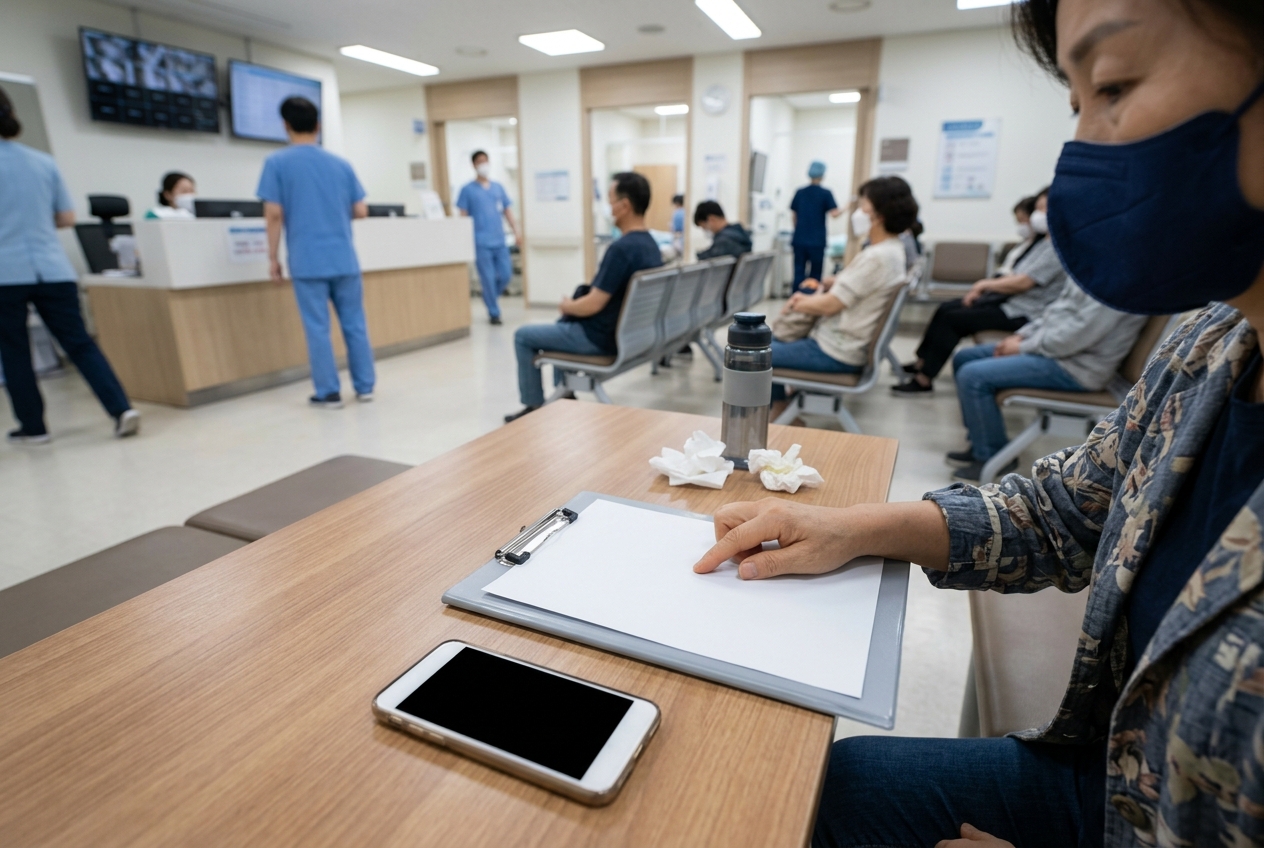
Once you have decided to go to the emergency room, stay calm and prepare the following to speed up the triage process. First, if the patient is taking any regular medication, be sure to bring the prescription or the medicine bag. This is a crucial clue for medical staff to understand drug interactions or underlying conditions. Additionally, a note summarizing recent medical history is very helpful. If details such as allergies, past surgical history, and information on current supplements are written down, it will significantly improve the efficiency of your care.
Emergency rooms operate based on 'severity,' not first-come, first-served. Therefore, it is important to accurately explain the patient's condition upon arrival. Clearly communicate when the pain started, its nature, and any accompanying symptoms. Rather than just waiting, informing the nurse of any changes in the patient's condition is also a good approach. If the patient is conscious, it is most accurate for them to explain their symptoms directly; if they are unconscious, the accompanying guardian must provide the accurate situation.
Precautions: Things to Know When Visiting the ER

Just because you have arrived at the emergency room does not mean you will see a doctor immediately. You will go through a severity classification process called 'Triage,' and if there are patients in more critical condition than you, the waiting time may be long. You must understand that this is not a system failure but an essential process to save lives. Also, since the emergency room is a place where patients with infection risks gather, it is recommended that only a minimum number of guardians accompany the patient.
The Dangers of Driving Yourself
One thing you should never do is drive yourself. If your symptoms suddenly worsen and you lose consciousness, it could lead to a major accident. If you are in a situation where you have to drive, it is much safer and faster to use the 119 ambulance service. Paramedics monitor the patient's condition during transport and relay information to the emergency room in advance so they can prepare for treatment. Care provided inside the ambulance plays a vital role in securing the 'golden time' after arrival at the hospital.
Criteria for Choosing an Emergency Room
Not every hospital can perfectly treat every condition. If cardiovascular or brain disease is suspected, it is better to visit a 'Regional Emergency Medical Center' where relevant specialists are on duty. If you only need simple treatment or tests, visiting a local emergency medical institution is more efficient in terms of time and cost. Before visiting, you can use the 'Emergency Medical Portal (E-Gen)' to check real-time bed information and operating emergency rooms. The portal is also accessible via mobile, making it easy to check while on the move.
Using the Emergency Room: A Wise Approach
The emergency room is your last line of defense. However, it is not the answer for every situation. If you are ill at night or on a holiday, searching for a local 'Moonlight Children's Hospital' or 'Night-time Medical Institution' is a good alternative. Reducing unnecessary emergency room visits also means returning precious time to patients who truly need it.
Health-related judgments can sometimes be very subjective. If your symptoms are ambiguous, try calling 119 to request a consultation. A professional counselor will listen to your symptoms and guide you on whether an emergency room visit is necessary and which hospital is best to visit. The 119 emergency consultation service is available 24/7, year-round, and can also provide first-aid instructions.
Daily Practices: Preparing for Emergencies
Emergencies happen without warning. Make the following preparations in advance: First, create an emergency contact list that includes blood type, underlying conditions, and medications for all family members, and store it in your wallet or smartphone. Second, save the phone numbers of your frequently visited hospitals and nearby emergency medical institutions in your phone. Third, learning basic first-aid can help you respond without panic during a crisis. In particular, CPR and how to use an Automated External Defibrillator (AED) are key skills that can save a family member's life. It is also important to get into the habit of knowing the locations of nearby AEDs. Based on the information summarized today, please respond calmly. The emergency room is a place that protects your precious life, but to maintain its value, we all need to use it correctly. Through accurate judgment, may you receive the best treatment at the right time.
Frequently Asked Questions
Should I go to the emergency room if I have sudden abdominal pain at night?
It is difficult to distinguish between simple indigestion and acute conditions like peritonitis. If the pain becomes increasingly severe, if you feel extreme pain when pressing and releasing your abdomen, or if it is accompanied by fever and vomiting, it is recommended to visit the emergency room immediately.
Why don't I get treated immediately when I go to the emergency room?
In the emergency room, the order of treatment is based on 'severity,' not arrival time. Because patients with life-threatening conditions are treated first, waiting times for relatively minor cases may be longer.
What should I bring when visiting the emergency room?
Bringing the patient's ID, regular medications or prescriptions, and a note summarizing recent medical history is a great help for medical staff to assess the condition.
If I call 119, do I always go to the emergency room?
119 paramedics assess the patient's condition and transport them to the nearest hospital capable of providing appropriate treatment. They do not automatically go to just any emergency room, but prioritize hospitals that have the specialized departments required for the patient.