Colorectal cancer often shows almost no symptoms in its early stages. This is why many people only visit the hospital after the disease has progressed significantly. However, our bodies clearly send warning signals through subtle changes. Knowing the early symptoms of colorectal cancer and being sensitive to changes in your body can significantly increase the chances of prevention and early detection. This article covers specific signals that may suggest colorectal cancer and management practices you should implement in your daily life.
Changes in Bowel Habits: The First Signal to Suspect

One of the most representative early symptoms of colorectal cancer is a change in bowel habits that differs from your norm. You should be cautious if you suddenly experience severe constipation, frequent diarrhea, or the 'pencil stool' phenomenon where the diameter of your stool becomes noticeably thinner. This occurs because growing cancer cells in the colon narrow the passage or interfere with bowel movements.
The criterion for distinguishing between symptoms caused by temporary dietary changes and those caused by colorectal cancer is 'persistence.' If these symptoms repeat for more than two weeks, rather than being a result of temporary stress or food intake, you should not take them lightly. In particular, if you feel a persistent sense of incomplete evacuation even after using the restroom, you should consider a colonoscopy.
Checklist: Check if your usual rhythm has been disrupted, such as having bowel movements more than three times a day or less than once every three days. It is also an important indicator if you spend more time in the restroom than usual or if you repeatedly have to strain during bowel movements. As a tumor grows, you may feel pain during defecation or a lingering feeling that stool remains after you are finished. Since these changes are likely structural signals from your colon, keeping a bowel movement diary is a good habit.
Bloody and Mucus Stools: Do Not Mistake Them for Simple Hemorrhoids
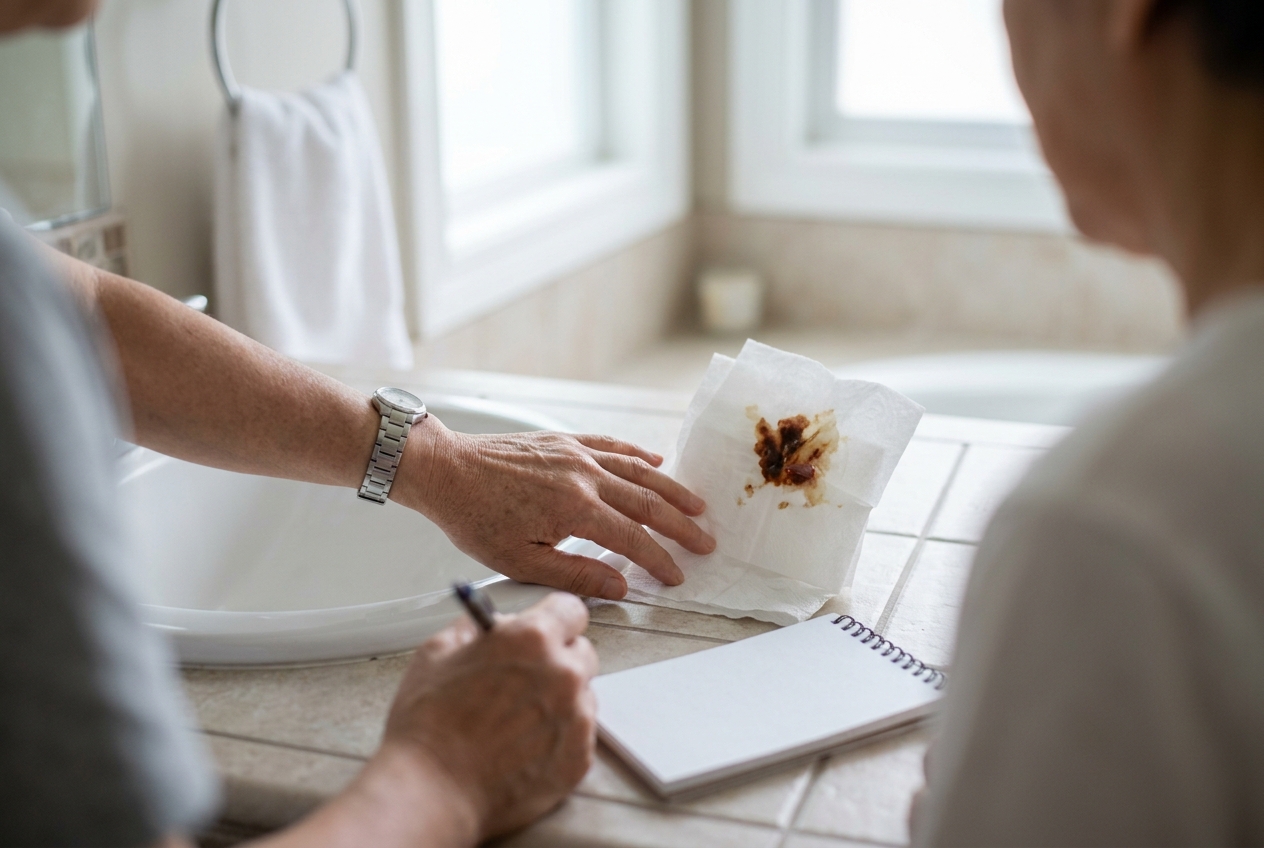
Many people see blood in their stool and assume it is just hemorrhoids, dismissing it as nothing serious. While bleeding from hemorrhoids is much more common, one must not forget that bloody stools can also be a sign of colorectal cancer. Blood from colorectal cancer is usually a darker red or maroon color rather than bright red. This is because the further the bleeding site is from the anus, the more the blood oxidizes as it passes through the colon.
Additionally, mucus in the stool can also be a sign of inflammation or tumors in the colon. It is dangerous to assume that just because you have hemorrhoids, you do not have colorectal cancer. If bleeding does not stop even after hemorrhoid treatment, or if you experience painless bleeding during bowel movements, you must consult a gastroenterologist.
Precautions: If you notice bloody stools, recording the color, amount, frequency, and presence of pain during bowel movements will be very helpful for your consultation. If bleeding persists without pain, it may indicate a deeper issue than simple hemorrhoids, so you should book a detailed examination immediately. Beyond bloody stools, if your stool contains excessive mucus or has an unusually foul odor, you should consider the possibility of changes in gut flora or decay caused by a tumor.
Abdominal Discomfort and Unexplained Weight Loss

As colorectal cancer progresses, it can cause abdominal bloating, gas, or frequent abdominal pain because gas cannot be properly expelled. It is easy to dismiss this as simple indigestion, but if you experience intermittent abdominal pain regardless of food intake, you should suspect a physical obstruction inside the colon.
Furthermore, you should pay close attention if you lose weight without dieting or feel extreme fatigue. These can be systemic symptoms that appear as cancer cells consume nutrients or as anemia develops due to chronic intestinal bleeding. Since these symptoms are more likely to appear when the disease has progressed to a certain point rather than in the early stages, regular check-ups before symptoms appear are more important than anything else.
Selection Criteria: Check if the abdominal pain is localized to a specific area or if you feel a general heavy sensation. In particular, if the pain worsens after meals or if you feel a lump in your abdomen, you should visit a hospital without delay. In the case of weight loss, if you have unintentionally lost more than 5% of your usual weight within 6 months, you should seek the pathological cause. Also, check if you have symptoms of anemia. Chronic bleeding from colorectal cancer can be so subtle that it is invisible, so if dizziness or lethargy persists, it is advisable to check for anemia through a blood test.
Colonoscopy: Why You Should Get One Even Without Symptoms

Because early symptoms of colorectal cancer are vague, it is often too late by the time you get tested after symptoms appear. Therefore, the most certain way to prevent colorectal cancer is regular colonoscopy. A colonoscopy is the only method that allows for the immediate removal of 'polyps,' which are called the seeds of colorectal cancer. Removing polyps in advance can fundamentally block the possibility of them developing into colorectal cancer.
Generally, it is recommended for healthy adults without a family history to start at age 50, but recently, the incidence of colorectal cancer in young people in their 30s and 40s is rising, so it is recommended to get tested every 5 years starting in your 40s. If you have a family member with colorectal cancer or have symptoms like bloody stools, it is safer to get tested immediately regardless of your age.
Action Plan: The process of emptying the colon the day before the colonoscopy is important. You must consume enough water when taking the prescribed bowel preparation solution and strictly follow the pre-examination instructions (fasting, checking medications) to ensure an accurate test. Since polyps found during the exam can be removed immediately, it is best not to schedule demanding activities on the day of the exam. Also, you may experience gas or temporary abdominal pain after the exam, but this is a natural process. Remember that a colonoscopy is not just for detecting cancer, but is the most proactive health management activity to prevent cancer itself by removing adenomatous polyps.
Dietary Habits to Protect Colon Health in Daily Life
Improving dietary habits is essential for preventing colorectal cancer. A meat-heavy diet, especially excessive consumption of red meat and processed meat (ham, sausage, etc.), is not good for colon health. Instead, you should consume plenty of fiber-rich vegetables, fruits, and whole grains to stimulate bowel activity.
Also, proper hydration prevents constipation and helps expel waste from the colon. Regular exercise also promotes peristalsis in the colon, which is a great help in preventing colorectal cancer. It is best to avoid alcohol and tobacco as they directly irritate the colon mucosa or produce carcinogens.
Comparison Criteria: When choosing processed foods, get into the habit of checking the ingredient label and choosing products with fewer additives. Also, replace white rice with multi-grain or brown rice, and when eating meat, add vegetables to increase fiber intake. 30 minutes or more of aerobic exercise every day helps improve blood flow in the colon and boosts immunity, which helps suppress the proliferation of cancer cells. Cooking methods are also important; it is wise to choose boiling or steaming over grilling or frying meat directly to minimize the generation of carcinogens. Rather than changing your diet drastically, a gradual approach of replacing one meal a week with healthy ingredients is more advantageous for long-term practice.
Regular Check-ups are the Best Treatment
Early symptoms of colorectal cancer do not arrive without warning. Our bodies are always sending signals, but we are likely overlooking them. Please always remember the signals mentioned today: changes in bowel habits, bloody stools, abdominal pain, and weight loss. Most importantly, instead of the complacent thought that 'it won't happen to me,' you should adopt an attitude of objectively checking your body's condition through regular check-ups. Protecting your health while you can is the wisest choice.
Colorectal cancer is a type of cancer with a very high cure rate if detected early. In particular, if detected in stage 1 or early stage 2, a high survival rate can be expected with surgery alone. Therefore, it is more important than anything else not to miss small changes in the colon through regular check-ups. Starting today, observe your bowel habits closely, and if your check-up cycle has arrived, show the initiative to book an appointment immediately. A healthy colon is the foundation of a vibrant daily life.
※ This content is intended for general health information purposes and cannot replace medical diagnosis or treatment. If you have specific symptoms or concerns, please be sure to visit a professional medical institution and consult with an expert.
Frequently Asked Questions
When do early symptoms of colorectal cancer usually appear?
There are almost no symptoms in the early stages of colorectal cancer. If symptoms have appeared, it is highly likely that the cancer has already progressed to some extent, so regular colonoscopies are essential regardless of the presence of symptoms.
If I have severe constipation, is the probability of having colorectal cancer high?
Constipation itself is not a direct cause of colorectal cancer, but if you suddenly experience severe constipation or changes in bowel habits compared to your norm, you should suspect changes inside the colon, so an examination is necessary.
If I have bloody stools, is it definitely colorectal cancer?
No. Bleeding from hemorrhoids or anal diseases is much more common. However, it is dangerous to conclude the cause of bleeding on your own, so if you have persistent bloody stools, you should visit a hospital to confirm the exact cause.
How often should I get a colonoscopy?
Generally, once every 5 years is recommended for adults without risk factors. However, the examination cycle may vary if you have had polyps removed, have a family history, or based on a specialist's judgment.
Can young people also get colorectal cancer?
Yes, the incidence of colorectal cancer among the younger generation is increasing due to recent changes in dietary habits and stress. If you have symptoms, it is recommended to get tested regardless of your age.