A campervan is an attractive vehicle that offers both the freedom of movement and the comfort of a home. However, there are many variables to consider, and it should not be approached based on vague romanticism alone. As it is a high-value asset, a cold-headed analysis of your lifestyle, actual frequency of use, and maintenance capabilities must come first. Always remember that beyond its function as a travel tool, the vehicle is equipped with complex systems such as electricity, gas, and water. You must fully consider not only the initial investment costs but also the physical and temporal costs incurred during operation to ensure a successful purchase.
The Freedom and Realistic Constraints of Campervans
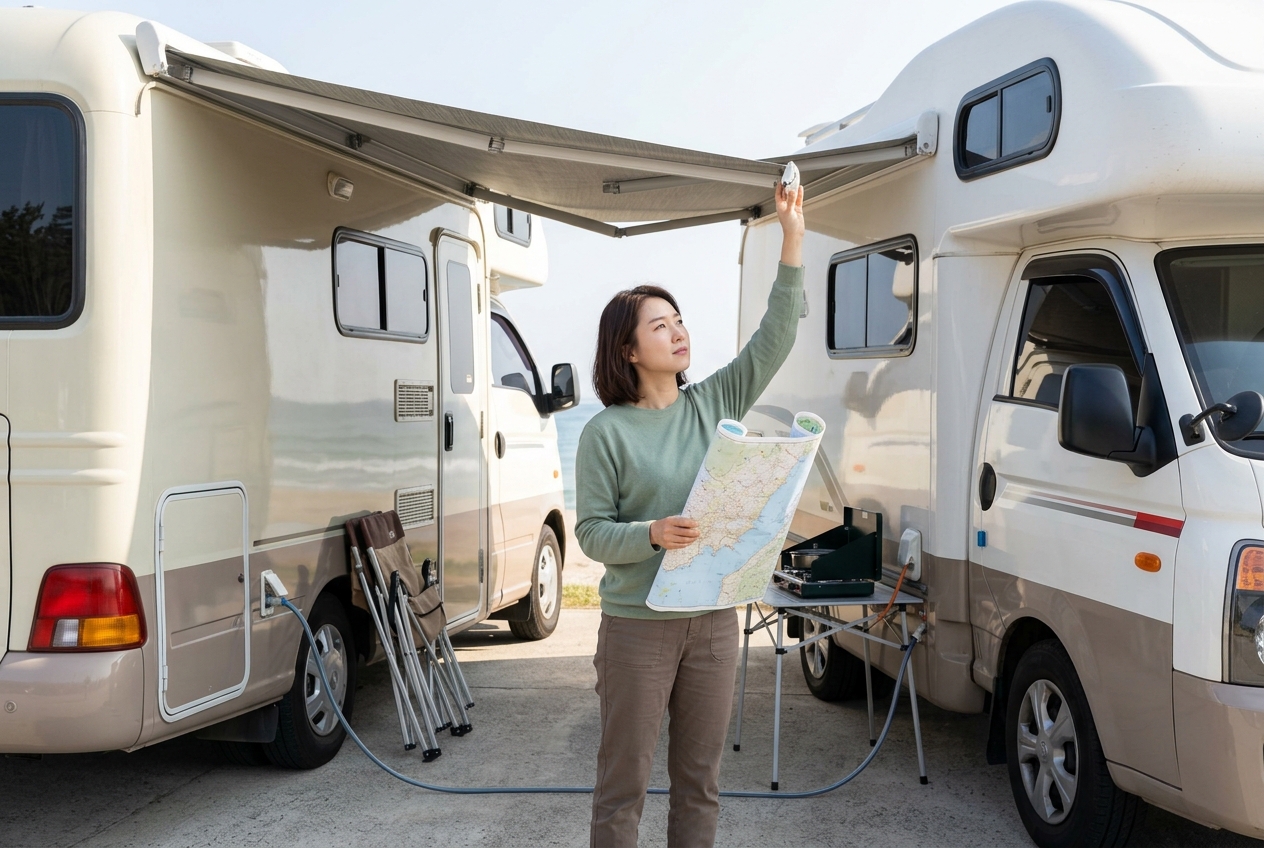
The biggest advantage of a campervan is that you can stay wherever you want without having to book accommodation. You can live a life closer to nature, free from the constraints of travel time and lodging locations. Especially for those with children or traveling with pets, the ability to rest in a space that feels like home without the hassle of moving luggage is a major strength. The experience of moving your own space away from daily life is a unique value that only a campervan can provide.
However, this freedom comes with realistic constraints. First, because the vehicle is larger than a standard passenger car, securing parking space is the biggest issue. If you live in an apartment, you often cannot enter the underground parking lot, so you must find a separate paid parking lot specifically for campervans. Also, due to the vehicle's height and width, you must always be careful when entering narrow alleys, low tunnels, or underground parking garages, which can increase driving fatigue. Additionally, because the center of gravity is higher than that of a standard vehicle, rolling may occur during sharp turns, making defensive driving essential.
A key checkpoint when driving is to always be aware of the vehicle's total height. Many drivers frequently attempt to enter parking lots out of habit from driving passenger cars, leading to collisions with overhead structures. Furthermore, since campervans have longer braking distances than standard vehicles, it is safer to maintain a safety distance from the vehicle in front that is at least 1.5 times greater than usual. When parking, do not rely solely on the rearview camera; make it a habit to have a passenger get out to check the external terrain.
Characteristics by Vehicle Type and Finding the Right Model for You
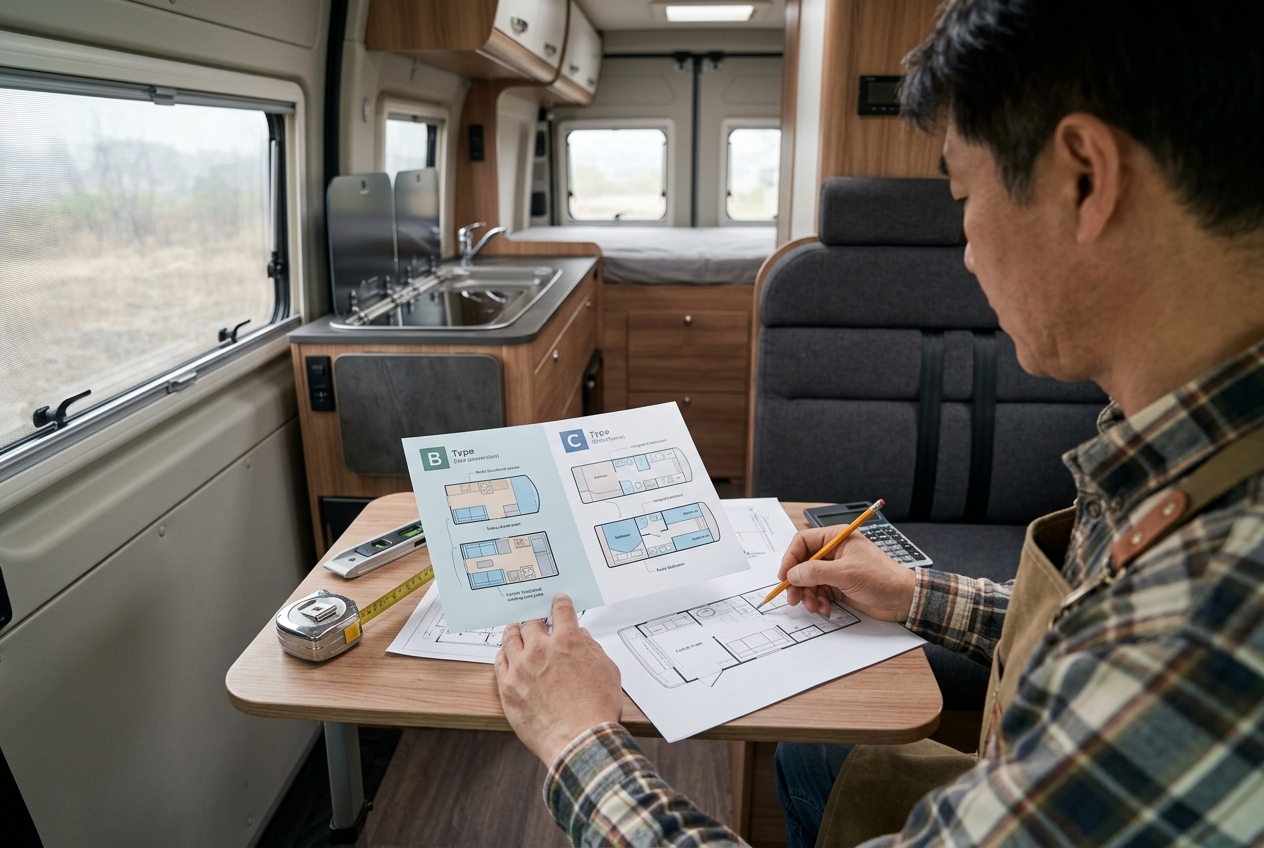
Campervans are broadly divided into van conversions, motorhomes, caravans, and truck campers. Van conversions are modified vans that offer excellent mobility and are easy to drive on regular roads. They have the advantage of being usable as daily vehicles, but the interior space is narrow, which can feel stifling during long trips. On the other hand, motorhomes are vehicles equipped with full living spaces, maximizing comfort, but their large and heavy bodies make driving burdensome and fuel efficiency is lower.
Caravans can be detached from the towing vehicle, allowing you to drive the vehicle separately once you reach your destination. However, they may require a towing license and demand advanced driving skills when reversing. Your choice should depend on whether your primary travel style is movement-oriented or stationary-oriented. If you travel frequently, a van conversion is advantageous; if you prefer to stay in one place for a long time and enjoy leisure, a caravan or a large motorhome is suitable. When choosing a campervan, do not just look at the interior design; comprehensively consider the vehicle's driving performance, engine durability, and the convenience of after-sales service.
Selection criteria when choosing a model are 'number of people' and 'purpose'. If you are traveling as a couple, a compact van conversion is economical, but if a family of four is traveling together, a motorhome with a bunker bed or a large caravan is inevitably necessary. Also, considering the environment of domestic campsites, you should check in advance that many campsites cannot accommodate vehicles that are too large. If you are considering a used vehicle, check if the electrical system (such as lithium iron phosphate battery capacity) meets the latest standards and carefully inspect for signs of water leaks.
Operational Budget and the Reality of Maintenance
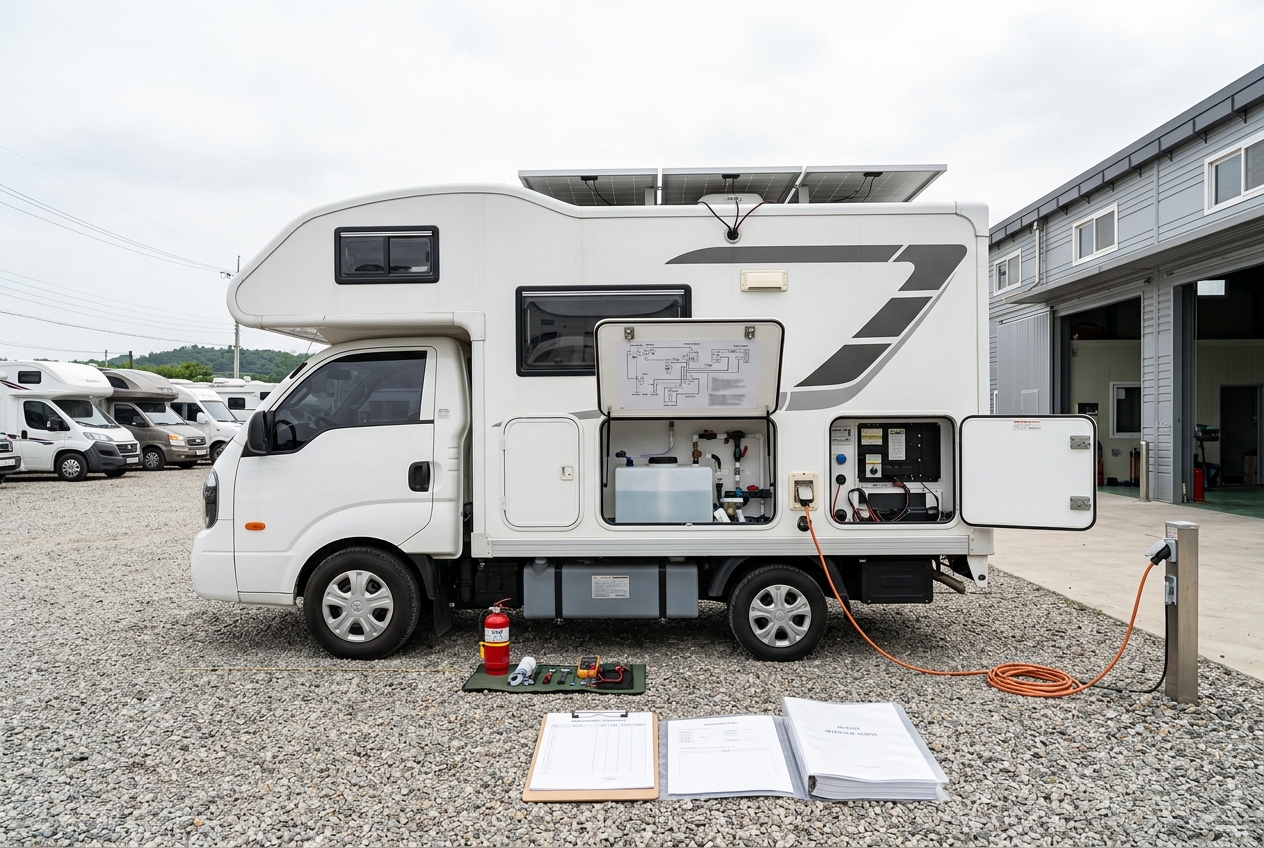
A part that many prospective owners overlook is the maintenance cost beyond the initial purchase price. Campervans have faster replacement cycles for consumables than standard vehicles, and inspections of various home appliances and electrical systems are essential. Equipped with complex systems such as solar panels, lithium iron phosphate batteries, parking heaters, and fresh water tanks, they must be inspected by experts periodically. Also, since automobile taxes and insurance premiums can be set higher than for standard vehicles, it is recommended to check quotes with insurance companies in advance.
You must also be aware of seasonal maintenance points, such as preventing freezing in winter and managing electrical systems. In particular, since electrical systems are directly related to fire risks, avoid reckless modifications by unverified companies. You can reduce economic burden by creating an annual operating plan that includes regular inspection costs, parking fees, and unexpected repair costs. Also, because campervans require basic maintenance such as preventing battery discharge and checking tire pressure even during periods of non-use, diligence is required to ensure the vehicle is not neglected.
The most important practical method is to 'familiarize yourself with the manual'. Always keep the electrical circuit diagrams and water tank piping diagrams provided by the vehicle manufacturer. If a sudden power outage or water supply interruption occurs during camping, you can solve the problem yourself if you understand the basic structure. Also, visiting a professional company at least once a year to check for gas line leaks and the condition of electrical connectors is the key to safe operation. Even if it costs money, having experts handle parts directly related to safety is the way to save on larger repair costs in the long run.
5 Things to Check Before Buying a Campervan
First, is there an actual space where you can park it? Second, is the driver's proficiency in driving large vehicles sufficient? Third, how many times a year do you plan to go camping at a minimum? Fourth, are you willing to learn how to use basic facilities such as electricity and water? Fifth, has a budget plan considering depreciation been established? If you cannot answer these questions positively, we recommend that you gain sufficient experience through rentals or campervan sharing services rather than purchasing.
Buying a campervan is not just buying an object, but buying a new lifestyle. Rather than buying blindly, it is most important to rent various models to experience the actual usage environment and identify what options are essential for you. Also, listening to the experiences of actual owners through campervan communities or offline clubs is very helpful. Before purchasing a vehicle, be sure to take a test drive and take time to get used to the vehicle's size and visibility.
As a precaution when purchasing, beware of the 'option trap'. If you try to include all the latest features from the beginning, the budget will rise rapidly. It is wise to configure it with only the essential basic options (heating/cooling, battery, fresh water system) and add more when you feel the need during actual use. Also, keep in mind that a more expensive vehicle is not necessarily better; the best campervan is one that fits your driving skills and parking conditions.
Rentals and Sharing Services as Alternatives
If you are burdened by the purchase cost or worried about parking space, make active use of rental services. Rentals have the advantage of being free from the responsibility of vehicle maintenance and allowing you to use the latest model vehicles only when needed. Also, the method of renting individual vehicles for short periods through campervan sharing platforms is becoming active. It is not too late to decide on a purchase after identifying which structure suits you and what level of inconvenience you can tolerate through these experiences. Rather than an unreasonable purchase, making a rational choice that fits your lifestyle is the secret to maintaining a campervan life for a long time. Do not forget that a campervan is not an end in itself, but a means for enjoyable travel.
Frequently Asked Questions
Can I drive a campervan with a standard passenger car license?
It depends on the size of the vehicle and the number of passengers. While many models can be driven with a standard Class 1 license, large motorhomes or campervans exceeding a certain weight may require a Class 1 large vehicle license or a separate towing license, so you must check the vehicle specifications.
Where should I park a campervan?
Standard parking spaces in apartments or villas often do not meet the dimensions. You must use dedicated parking lots, public parking lots with designated campervan parking zones, or private storage facilities.
What is the fuel efficiency of a campervan?
Compared to standard passenger cars, they have lower fuel efficiency because they experience more air resistance and are heavier. Although it varies depending on the driving environment, it usually maintains a level of 6 to 9 km per liter.
How do I maintain a campervan in winter?
You must empty all water from the pipes to prevent freezing, and since battery efficiency can drop, measures to prevent discharge in low-temperature environments are necessary.