Once you have booked your flight tickets with excitement, the realistic concerns begin. That is, packing for your overseas trip. While the items you need may vary depending on the weather and environment of your destination, there are essential items that everyone should pack regardless of where they are going. Rather than just filling your bag, you need a strategic approach that considers the purpose of your trip, the duration, and your personal health condition.
Many people regret not packing something right at the airport before departure. To reduce such trial and error, today we will look at the checkpoints you should not miss from the beginning to the end of your travel preparations. If your preparations are perfect, you can deal with unexpected situations at your destination calmly and with ease.
Why is it important to create an overseas travel packing list?
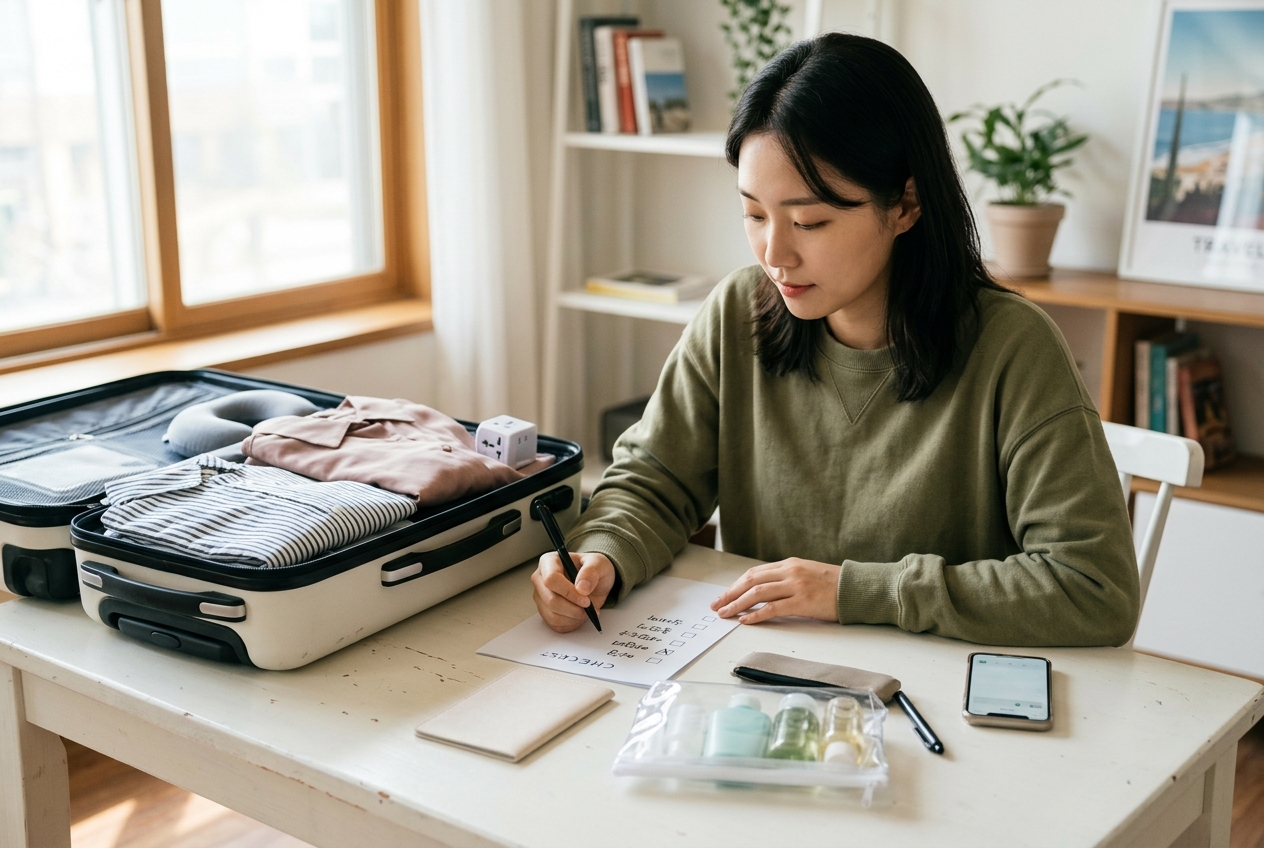
The key to travel preparation is distinguishing between 'must-haves' and 'nice-to-haves.' Packing as much as possible is not necessarily better. In fact, unnecessary luggage increases travel fatigue and reduces space for shopping. The ability to distinguish between what can be purchased locally and what must be brought from home is the mark of an expert traveler. Creating a checklist allows you to filter out duplicate items while packing and prevents the mistake of forgetting important things in the rush on the day of departure.
What should I pack first?
The first thing to consider is documents. You must check that your passport has at least 6 months of validity remaining. If the expiration date is approaching, you might not be able to leave the country, so check this first. Next are your flight tickets and accommodation booking confirmations. While everything can be handled via smartphone these days, it is safer to prepare printed copies or offline saved versions of important documents in case of battery drain or internet connection issues. Also, be sure to check if you have travel insurance. Travel insurance is an essential safety net for unexpected accidents, illnesses, or lost luggage. Saving an English copy of your insurance policy allows for quick processing if you need to visit a local hospital.
Essential auxiliary items for local adaptation
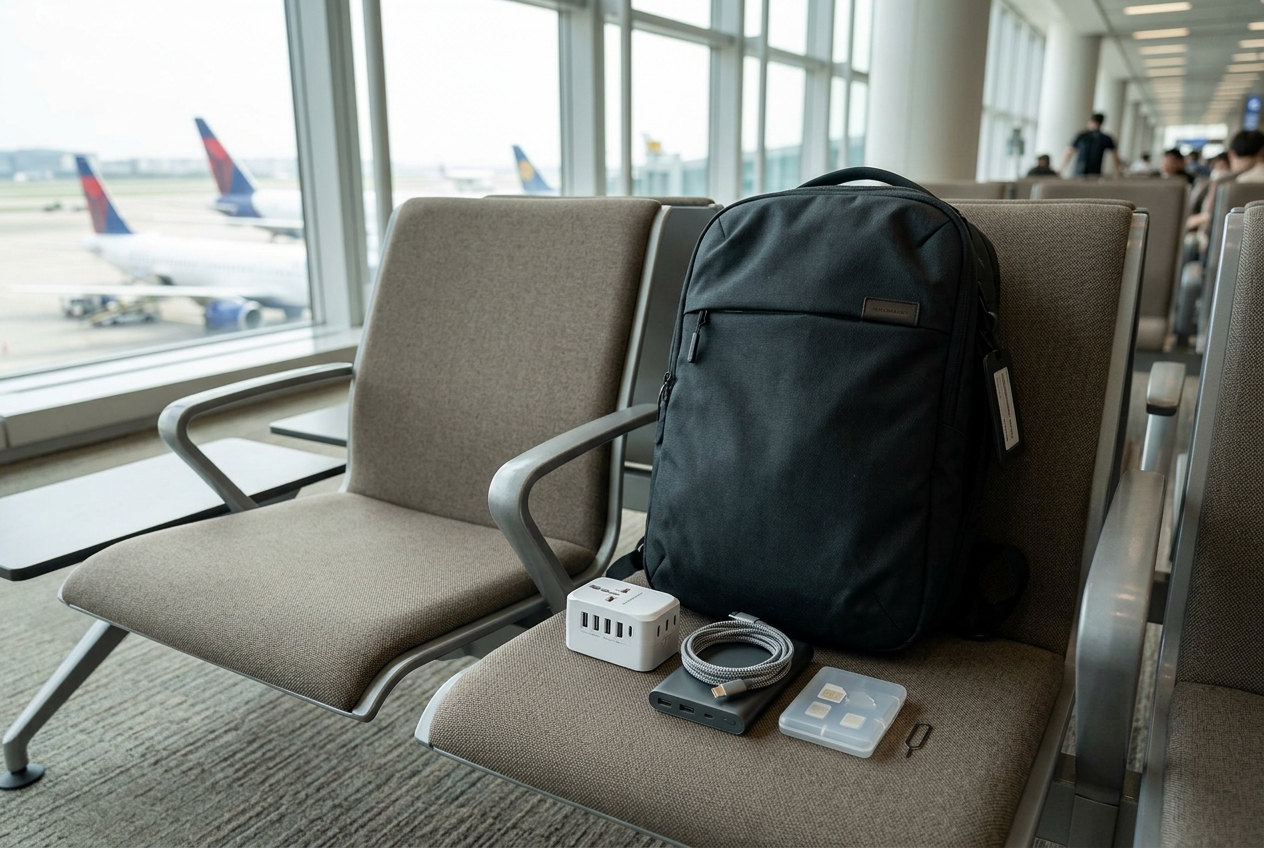
Next are practical items you can use immediately upon arrival. A multi-adapter is a must. Since plug shapes vary by country, you should check the voltage and plug standards in advance. Many recently released multi-adapters include USB-C ports, making them convenient for charging multiple devices at once. Also, a power bank is essential for long flights or when using public transportation. However, remember that according to airline regulations, power banks must be carried in your carry-on luggage only. In addition, you should plan ahead to apply for a roaming service or purchase a local SIM card considering the local communication environment. If you are renting a pocket Wi-Fi device, it is a good idea to check the charging and return schedule in advance.
How should I modify my packing list for each destination?

The nature of packing for a resort in Southeast Asia is completely different from a city trip in Europe. For a resort, swimsuits, waterproof pouches, and sunscreen are priorities, whereas for a European trip, locks or money belts to prevent pickpocketing and comfortable walking shoes are much more important. You need the sense to adjust your list according to your travel theme. For example, if your trip involves a lot of walking, a lightweight daypack is essential, and if you are enjoying natural scenery, a portable picnic mat or tumbler will be very useful. Simply readjusting the priority of items based on the nature of your trip can significantly improve the efficiency of your suitcase.
Checklist for climate and environment-based essentials
If you are traveling to a place with large temperature differences, it is a good idea to pack several thin outer layers. Especially since it is always cold on airplanes, a light cardigan or windbreaker is a year-round essential. Also, if you are visiting a place with poor water quality, bringing a portable shower filter is a good choice for your health. If you have sensitive skin, decanting your familiar toiletries into small containers saves you the trouble of searching for new products locally. If you are traveling to a humid destination, pack functional clothing that absorbs sweat well; if it is a dry destination, it is better to pack extra moisturizer and artificial tears. Don't forget to check the weather forecast carefully and pack a folding umbrella or raincoat in case of rain.
How much medicine should I pack?
First-aid supplies are the most neglected yet most important items in travel preparation. If you take regular medication, it is recommended to prepare an English prescription as well. Basically, pack fever reducers, painkillers, digestive medicine, anti-diarrheal medicine, bandages, and disinfectant. Especially since many people get an upset stomach from unfamiliar food, having plenty of anti-diarrheal medicine is a great psychological help. Also, if you are prone to motion sickness, bring motion sickness medicine, and if you have allergies, pack antihistamines. When packing medicine, don't forget to familiarize yourself with the dosage and precautions, and check the expiration dates. If you take daily supplements, portioning out a few days' worth can also be a great help in maintaining your condition.
Efficient packing know-how to reduce luggage volume
Suitcase space is limited. Instead of just folding your clothes, try rolling them or using compression pouches. Using pouches makes it much easier to find your belongings and maximizes space utilization. As a rule, place heavy items at the bottom of the suitcase and items you need to take out frequently at the top. Wearing bulky outerwear on the plane to save suitcase space is also a good strategy. Also, placing shoes in shoe bags and arranging them along the edges of the suitcase can increase space efficiency. Putting small items like socks or underwear inside your shoes is also a great way to use space wisely.
Precautions for liquid luggage regulations
For carry-on luggage, liquids must be in containers of 100ml or less and placed in a 1-liter transparent zipper bag. If you violate this rule when packing cosmetics or toiletries, you may have to throw away valuable items at the airport security checkpoint. Using sample cosmetics or solid-form cleansers can solve both volume and regulation issues at once. For shampoo or body wash, using travel-sized solid shampoo bars is very convenient as they are free from liquid restrictions and won't leak. Solid toothpaste tablets can also significantly reduce volume. Since liquids take up more space than expected, it is wise to pack only as much as you will use during the trip.
How to manage valuables
Keep a copy of your passport and emergency contact information separate from your passport. It is also important to have a habit of distributing emergency cash rather than keeping it all in one wallet. Since smartphones are at high risk of loss, we recommend using a strap or a pickpocket-proof bag. It is easy to let your guard down while traveling, so you should always pay attention to your belongings. Make it a habit to use the hotel safe or keep valuables in a bag you carry on your person at all times. Keeping two separate passport photos in case of passport loss is a great help when applying for an emergency passport at a local embassy. Saving a copy of your passport in the cloud or your email is also an excellent backup strategy.
Final checklist before departure
Perform a final check 24 hours before departure. Make sure your passport, flight tickets, local currency, smartphone charger, power bank, and first-aid supplies are all in your bag. Also, check the weather at your destination once more to add or remove outer layers or umbrellas. Roaming settings or SIM card preparations should also be finalized at this time. Double-check your accommodation check-in time and airport route, and if necessary, check if you can open vouchers for local tours or restaurants offline. To avoid panic at your destination, it is a great preparation to note down the contact information of the local embassy or consulate. Also, don't forget to secure your home before leaving, such as turning off gas valves, locking windows, and clearing out the refrigerator. To enjoy your trip with peace of mind, relaxed preparation before departure is essential.
Packing is a small detail that determines the satisfaction of your trip. Of course, you can buy most things you lack locally, but the comfort provided by familiar items greatly enhances the quality of your trip. We hope this guide helps you create your own perfect list and prepare for a fun trip. Travel begins from the moment you start preparing. We hope you experience a safer and richer trip through careful preparation. Since even a small item can be a great help in a crisis, we hope you check your list carefully and have a trip full of wonderful memories.
Frequently Asked Questions
Do I have to carry the power bank in my carry-on?
Yes, to prevent fire risks, power banks must be carried in your carry-on luggage. If you check them in with your luggage, you may face the inconvenience of having to take them out at the airport.
How much first-aid medicine should I prepare for an overseas trip?
Prepare medicine mainly based on symptoms you frequently experience. Fever reducers, painkillers, digestive medicine, anti-diarrheal medicine, bandages, and disinfectant are the basics. If you have a chronic illness, it is safer to bring an English prescription.
What are the carry-on regulations for liquids?
Liquids are limited to 100ml or less per container, and all liquids must be placed in a single transparent zipper bag (1L capacity) and submitted at the security checkpoint. Note that containers over 100ml are not allowed in carry-on luggage, even if they contain only a small amount of liquid.
How much validity should my passport have at a minimum?
Most countries recommend that your passport have at least 6 months of validity remaining. If it is less than 6 months, there is a possibility that entry will be denied, so be sure to check before your trip and get it reissued if necessary.