While the excitement of setting off on a trip is thrilling, there is always an underlying anxiety about unexpected situations. In unfamiliar environments, the risk of accidents is higher than usual, and variables such as illness or loss of belongings are more likely to occur. In this context, travel insurance is not merely an option, but a minimal social safety net that guarantees the stability of your journey. The core principle of insurance is to structure a system where the insurer takes responsibility for large potential economic losses in exchange for a small premium. It is a financial product that enhances a traveler's peace of mind by having the insurer share the costs of risks that may arise during the trip.
Many people dismiss travel insurance as an 'expensive premium' or an 'unnecessary expense.' However, if you suffer from appendicitis requiring surgery or have your belongings stolen while abroad, you would have to bear tens of millions of won in medical expenses or losses entirely on your own without insurance. In countries with expensive healthcare systems, even simple medical treatments can cost millions of won. Therefore, it is wise to understand the essence of travel insurance and design it according to your travel schedule and specific needs. Rather than simply looking for the cheapest product, it is a much more economical choice to evaluate how comprehensively it covers potential risks.
Core Components of Travel Insurance Coverage

Travel insurance is largely composed of four main pillars: injury, illness, liability, and personal effects damage. These components cover almost every type of harm one might experience during a trip. First is coverage for accidental death and permanent disability, which prepares for cases where an accident during the trip results in permanent physical damage or death. Second is overseas medical expense coverage. This is the most frequently used item, providing reimbursement for local hospital treatment and prescription costs. Third is liability coverage, which supports legal liability that arises if you accidentally damage someone else's property or cause physical injury to another person during your trip. Finally, there is personal effects damage coverage, which compensates for items such as bags, cameras, and wallets that are stolen or damaged, up to a set limit.
Since the scope of coverage varies depending on the coverage amount (limit) set at the time of enrollment, it is important to set limits based on the cost of living and the scope of activities at your destination. For example, when traveling to North America or Europe where medical costs are high, you should set a high limit for medical expenses, and when traveling to areas prone to pickpocketing, you should carefully check the limit for personal effects damage. Additionally, adding riders for flight delays or baggage delays can significantly resolve travel inconveniences. Recently, riders that cover additional stay expenses due to flight cancellations or lost baggage have become particularly popular.
Of course, not all damages are covered. Intentional accidents, accidents occurring after drinking, and special situations such as war or civil unrest are often excluded from coverage. Furthermore, if a pre-existing condition that an individual has been suffering from recurs during the trip, it is highly likely to fall outside the scope of general travel insurance illness coverage. Therefore, it is essential to carefully review the terms and conditions of the insurance you have purchased and accurately understand the exclusions. Since the terms and conditions are an agreement between the insurer and the policyholder, simply checking the non-covered items in advance can prevent potential disputes later.
Essential Checklist Before Signing Up
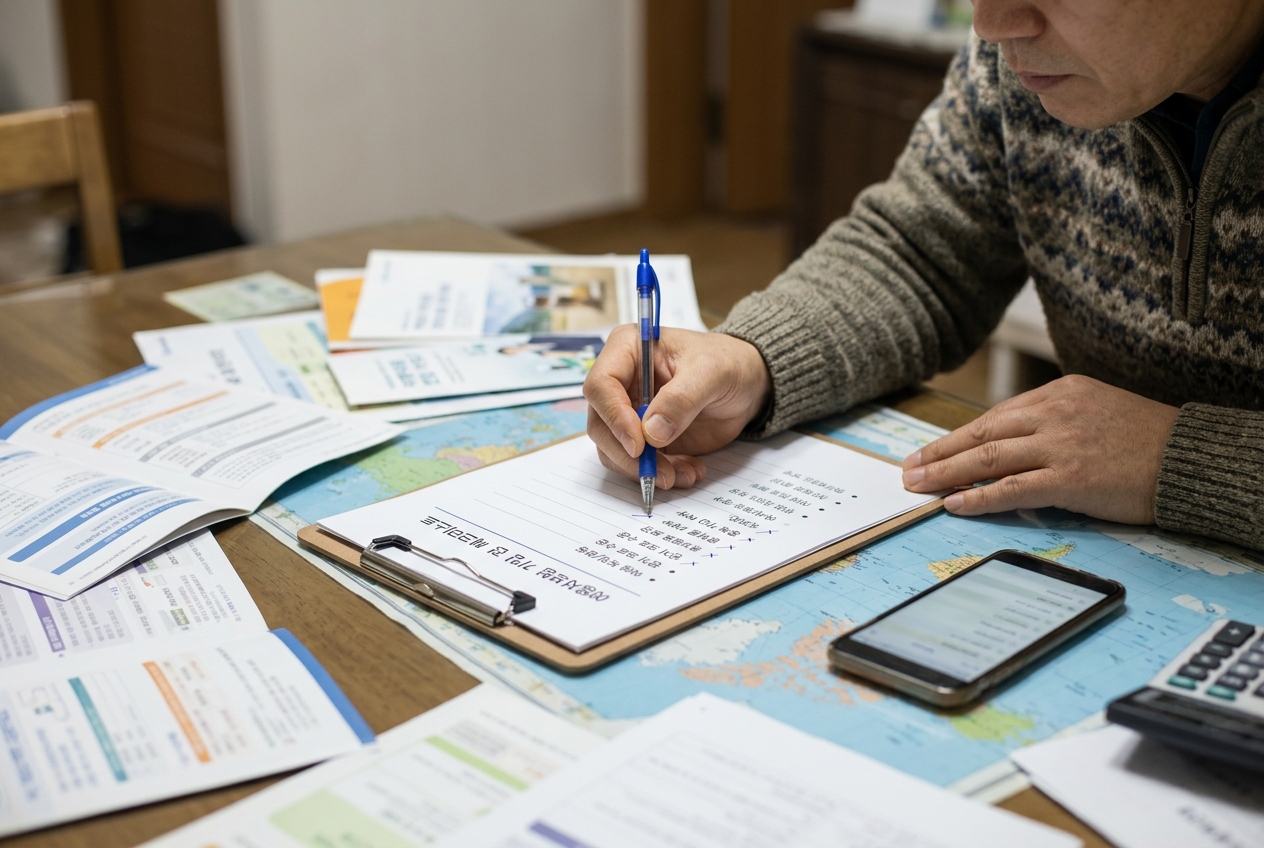
Before signing up for travel insurance, please check the following items in order. This is an essential process to reduce unnecessary disputes when filing a claim and to receive prompt assistance in the event of an actual accident.
- Purpose of Travel and Activities: Check whether it is a simple vacation or if it includes dangerous sports such as scuba diving or skiing. Certain leisure activities may be excluded from basic insurance and require a separate rider.
- Local Medical Standards and Cost of Living: If visiting a country with very high medical costs, it is recommended to set the indemnity medical expense coverage limit as high as possible.
- Personal Effects Coverage Limit: If you are carrying expensive laptops or cameras, you must check the coverage limit per individual item and the total coverage limit.
- Duplicate Coverage: Check if you already have indemnity medical insurance or travel insurance benefits provided by your credit card company to avoid wasting premiums on duplicate coverage.
- Familiarize Yourself with Claim Documents: Know in advance what documents you need to collect locally in the event of an accident (medical certificates, receipts, police reports, etc.).
When comparing insurance companies based on the checklist above, you should evaluate them comprehensively, looking at whether they have a well-established local contact network and whether they operate a 24-hour emergency support service, rather than just looking for the cheapest premium. Especially in countries where language barriers are an issue, the insurer's local medical support service is a great help. Emergency medical support services provide local hospital reservations, guarantee services, and interpretation support, acting as a reliable assistant in confusing situations.
Also, when deciding on insurance, it is a good idea to refer to the insurer's reliability and past claim payment history. Recently, digital insurers have been offering reasonable prices and simple enrollment procedures, making it much easier to select the optimal insurance for your travel purpose. When signing up, you must enter accurate information such as the insured's resident registration number, travel period, and destination; be careful, as entering incorrect information can be grounds for refusal of insurance payment later.
Practical Response Methods for Accidents During Travel
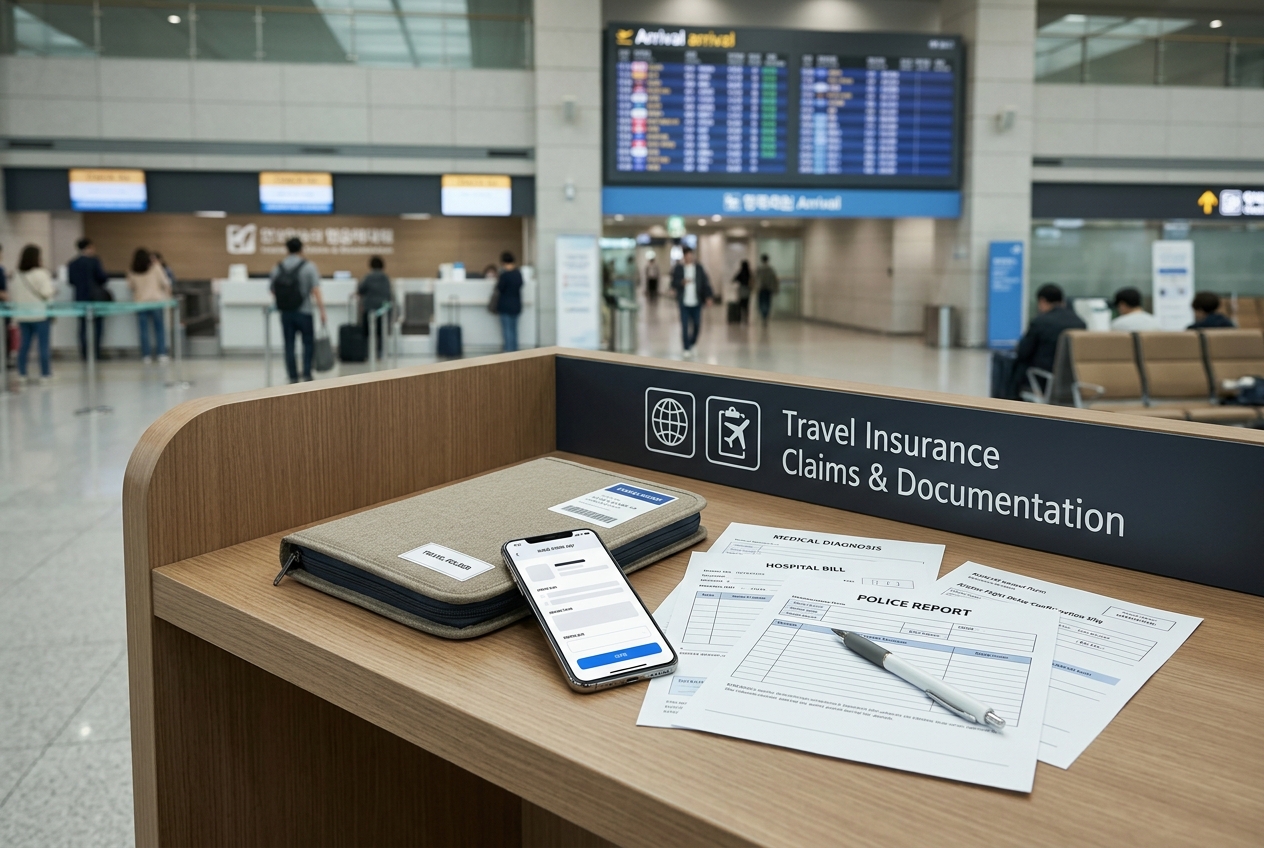
If you have an accident while traveling, the first thing to do is not to panic and to secure evidence. If it is an illness, you must obtain a medical certificate, treatment receipt, and prescription receipt after visiting the hospital. Especially in countries with expensive medical costs, contacting the insurer's emergency medical support center first to see if you can receive a guarantee service is a shortcut to saving cash. In many cases, if you request an insurance guarantee from a local hospital, you can receive treatment without paying large medical bills out of pocket.
If a theft occurs, you must visit a local police station to file a 'Police Report.' This is because it is highly likely that your claim for personal effects damage will be rejected if you do not have a police report. Do not forget to record the condition of the damaged items in detail through photographs. Loss and theft are strictly different, and most travel insurance only covers 'theft,' so a police report is an essential supporting document. Since all documents must be submitted to the insurer after returning home, it is a good habit to keep them in a separate folder so they are not lost. Additionally, if a flight cancellation or delay occurs, you must obtain a 'Flight Delay Confirmation' from the airline to claim delay compensation.
Insurance claims can be easily processed online or via an app after returning home. Recently, most insurance companies have systems in place to review documents uploaded in a mobile environment. Since you must apply before the statute of limitations for the claim (usually 3 years) expires from the date of the accident, it is best to organize the documents you collected immediately after returning home and process them quickly. If claim documents are missing, compensation may be delayed, so check once more using the checklist to ensure you have all the necessary documents from the local area before returning. If document preparation is insufficient, you will receive a request for supplementation from the insurer, which can prolong the review period.
Strategic Value of Utilizing Travel Insurance
Travel insurance is not merely an act of paying a fee, but an investment in protecting the time and experience that is travel. Unexpected events during a trip can instantly strip away a traveler's mental and economic composure. Insurance offsets these uncertainties and minimizes the economic impact when returning to daily life. The value of travel lies in the experiences and memories gained within it, and insurance acts as a shield to ensure that value is not damaged by accidents. Especially recently, as the number of family travelers increases, the utility of group enrollment that includes accompanying family members is being further emphasized.
Of course, insurance does not prevent all accidents. The best insurance is the traveler's habit of being careful to avoid accidents. However, the mindset of preparing for environmental factors and accidents that are beyond human control enhances the quality of the trip. The small insurance policy you prepare now will protect your precious trip from a major crisis in the future. It is important to recognize that purchasing insurance is not an option, but a necessity for safe travel. Developing the habit of prioritizing insurance and budgeting for it from the stage of preparing for the trip will serve as a foundation for making your travels more enriching in the long run.
All information regarding travel insurance is general guidance, and specific coverage details and terms may vary depending on the insurance product and company you choose. Therefore, we strongly recommend that you check the product description and terms and conditions of the relevant insurance company yourself before signing up, and consult with an expert if necessary. Start your thorough preparation for a safe and enjoyable trip today. Reading the coverage details in detail and selecting the riders you absolutely need is the most efficient way to utilize travel insurance. Choosing the right insurance and preparing your documents carefully will make your trip safer and happier.
Frequently Asked Questions
When is the best time to sign up for travel insurance?
It is recommended to complete your enrollment at least 1-2 days before you leave for your trip. While it is possible to sign up at the airport on the day of departure, signing up in advance during the travel preparation process allows you to prepare for your trip with peace of mind.
Do I need to buy travel insurance if I already have indemnity medical insurance?
Indemnity medical insurance is centered on domestic medical expenses. Medical expenses incurred overseas must be covered through separate travel insurance, and travel insurance includes items not covered by domestic indemnity insurance, such as personal effects damage or liability, so enrollment is recommended.
Is a police report mandatory in case of theft of personal effects?
Yes, in the case of theft, you must have a police confirmation (Police Report) to receive fair compensation from the insurer. Since loss is often excluded from coverage, documents proving that it was theft are essential.
Should only one person sign up for a family trip?
No. Travel insurance must be purchased individually for each insured person to receive coverage. When traveling with family, you can sign up more easily by using family-unit insurance products.
Do I need a separate rider if I plan to enjoy leisure activities?
High-risk sports such as scuba diving and paragliding may be excluded from basic insurance. When signing up, check if the activity is included, or add a leisure rider if necessary to ensure safety.