Cheongnyangni Station is more than just a place to board or exit trains; it stands at the heart of a massive transformation and serves as the core of transportation in northeastern Seoul. For some, it is a daily space that facilitates their morning commute, while for others, it is the starting point where the excitement of a trip to Gangwon-do or Gyeongsangbuk-do begins. However, due to its massive scale, complex flow, and constant changes, it can feel somewhat unfamiliar to first-time visitors or those returning after a long time. This article provides a detailed summary of the structural characteristics of Cheongnyangni Station and practical information to consider when using it.
Cheongnyangni Station as a Transportation Hub: Advantages and Realistic Limitations
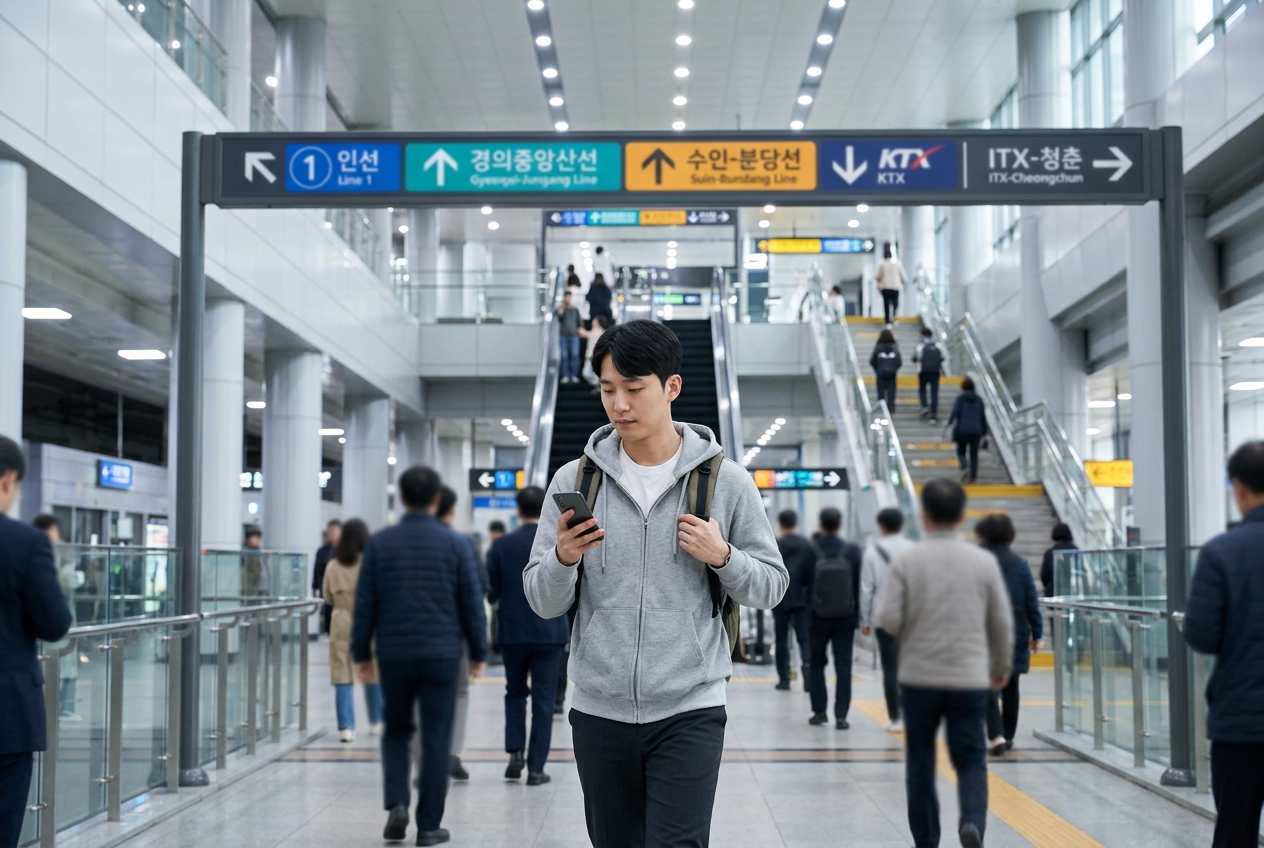
The greatest strength of Cheongnyangni Station is its overwhelming accessibility. It is rare even within Seoul to find a place where Line 1, the Gyeongui-Jungang Line, and the Suin-Bundang Line intersect, and where trunk trains like KTX and ITX-Cheongchun also stop. It serves as a gateway for those entering downtown Seoul from the northern and eastern parts of Gyeonggi-do, and the recent operation of the KTX-Eum has dramatically improved accessibility to the Gangwon-do region. While this is a blessing for travelers, it presents a realistic challenge for commuters who use this passage daily, as it creates a consistently crowded transfer environment.
Although the transfer system is well-established, the physical distance between lines is significant, and the high volume of passengers makes it essential to allow for sufficient time when transferring. Especially during rush hours, the path from the Line 1 platform to the KTX boarding area can become complex. For first-time visitors, rather than relying blindly on signs within the station, the most reliable way to save time is to check the train number and platform number in advance via a mobile app. It is also a good strategy to identify the location of your train car in advance to minimize walking distance during transfers. For example, when transferring from Line 1 to the Gyeongui-Jungang Line, knowing the platform location closest to the connecting passage allows for much faster movement. If you are unfamiliar with the route, listen to the announcements and follow the color-coded transfer lines on the floor, which is the safest method. Since stairs and escalators in transfer passages can experience constant congestion, maintain a proper distance from the person in front of you and move safely.
Changes Linked to Complex Shopping Malls: The Harmony of Shopping and Transit
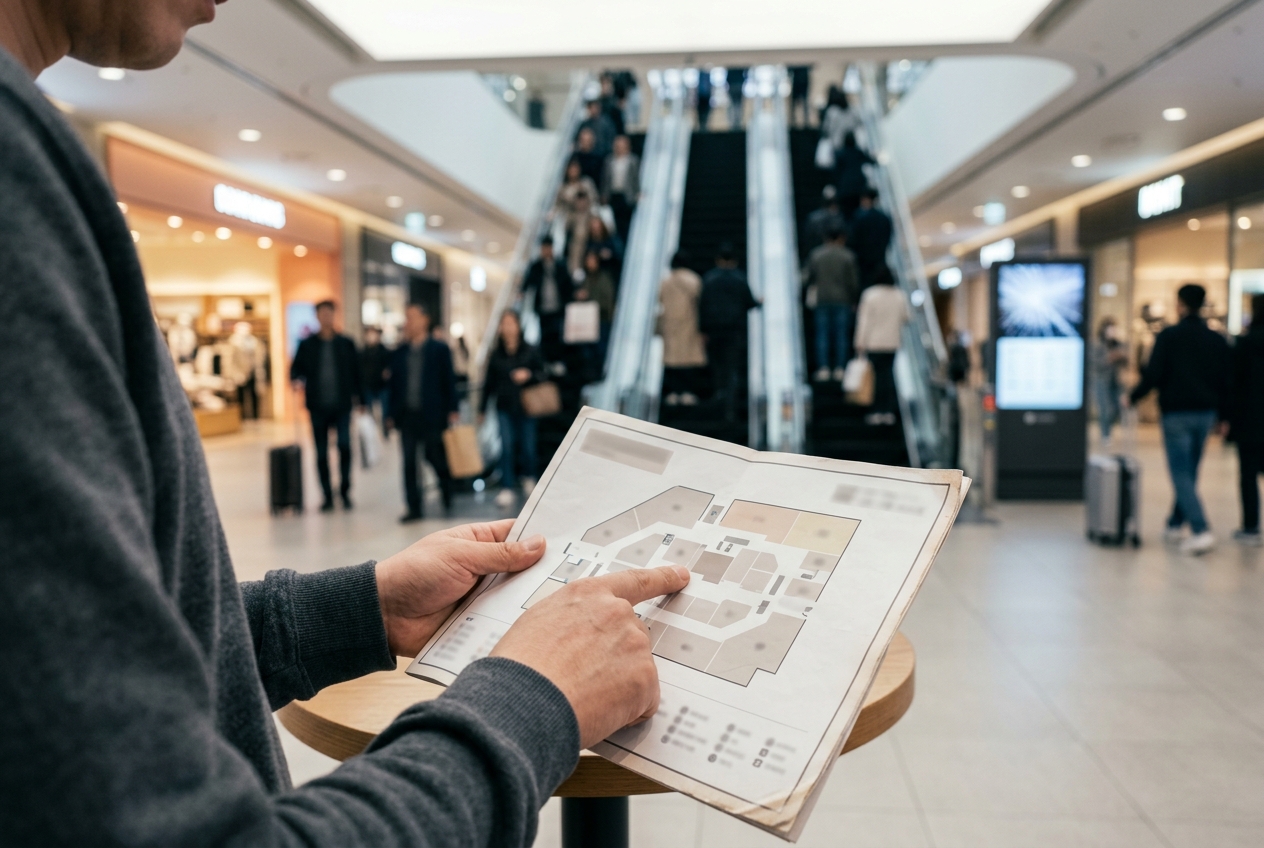
Complex shopping facilities directly connected to the station have changed the character of Cheongnyangni Station. It is an optimized environment for spending time or grabbing a meal while waiting for a train. If the Cheongnyangni Station of the past was merely a passage for boarding trains, its value as a meeting place or shopping space has now grown significantly. However, there are points to be aware of behind this convenience. On weekends or holidays, the station becomes extremely crowded as shoppers and travelers mix. If you plan to use the food court or cafes, it is better to avoid peak meal times, and parking can also take a considerable amount of time to enter on weekends. This is why public transportation is recommended over driving. If you plan to pass through the shopping mall to get to the station, check the building's operating hours and whether the internal passages are open in advance. Some passages may be closed at night or during certain times, so securing at least two routes is a way to reduce mistakes. If you find it easy to get lost due to the complex structure of the mall, it is best to first identify the floor guide or the location of the central escalator. The connection between the mall and the station is highly trafficked, so be careful to avoid collisions while walking, especially when accompanied by children or the elderly.
Rediscovering the Area Around the Station: What Has Changed?
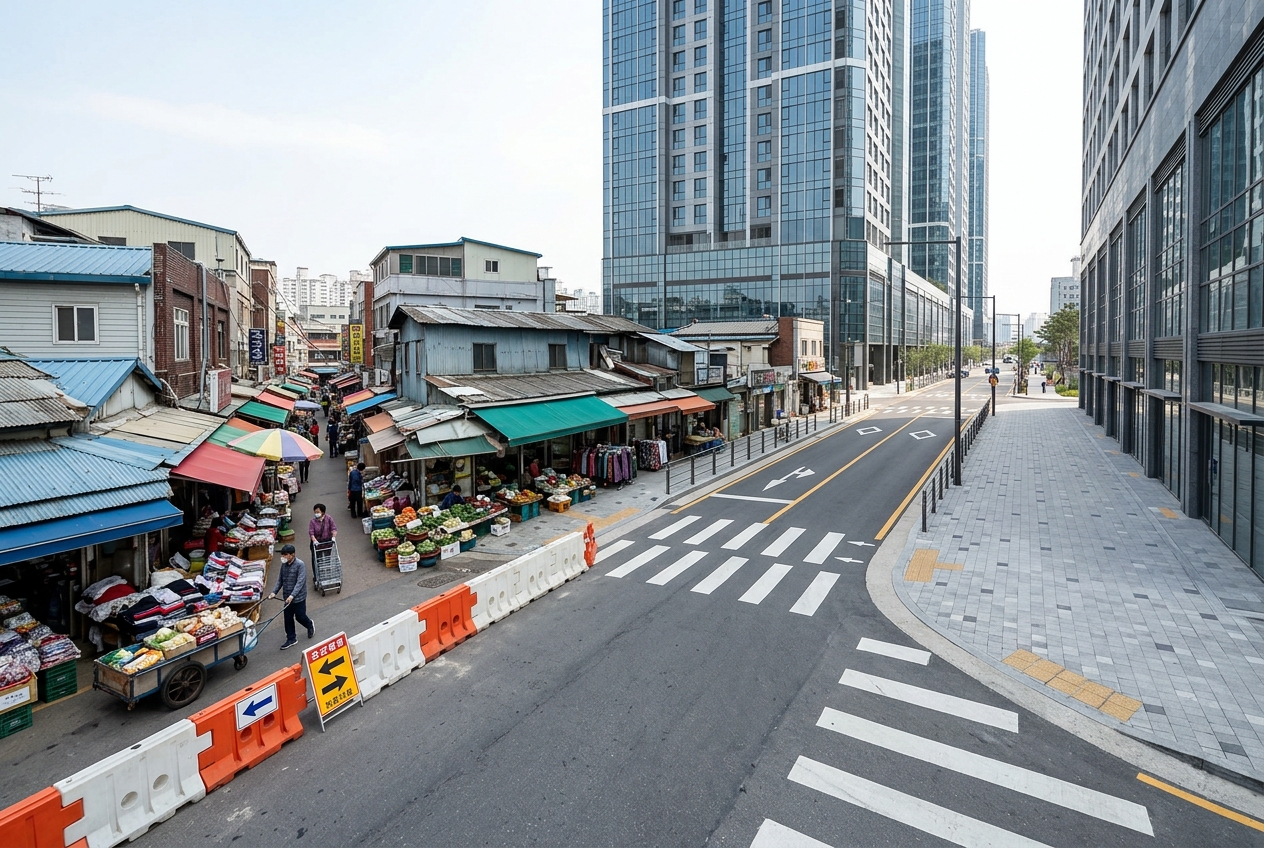
The area around Cheongnyangni Station has long been associated with traditional markets and an aging image. However, in the last few years, high-rise residential complexes have moved in, completely changing the skyline. While this change has served as an opportunity to increase the safety of the surrounding environment and expand convenience facilities, construction zones remain in various places, often causing pedestrian paths to suddenly narrow or requiring detours. When walking, always use designated crosswalks, and be careful to watch for falling objects or passage restriction notices near construction sites.
- Pedestrian Environment Check: Since pedestrian paths near construction sites change frequently, it is necessary to develop the habit of carefully watching for signs rather than walking while looking at your smartphone.
- Visiting the Traditional Market: Cheongnyangni Market is still a vibrant and attractive place. Although it is within walking distance from the station, it contrasts with the modern atmosphere of the station, so please be careful with your belongings when visiting. In particular, the area around the market can be difficult to navigate due to street vendors and pedestrians, so it is more convenient to use the main road in front of the station when carrying large luggage.
- Utilizing Surrounding Infrastructure: New shops and cafes are increasing around the station recently. If you want to avoid the congestion inside the station and spend some relaxing time, utilizing the nearby cafe street, which is a 5-10 minute walk away, is a good option.
- Transportation Connectivity: The bus transfer center in front of the station is very complex, so it is essential to check the bus route numbers in advance and confirm the exact platform number where your bus stops.
Optimization Strategies by User Type

Strategies should vary depending on the purpose of using Cheongnyangni Station. For travelers, it is important to identify the location of lockers where heavy luggage can be stored in advance. Because the station is large, finding the wrong locker location could mean walking a long distance while carrying your bags. On the other hand, for business travelers visiting for work, checking the environment of shared offices or cafes near the station rather than the food court inside the station will help increase work efficiency.
In particular, family users accompanied by the elderly or children must check the location of elevators. Escalators are always in operation, but if there are many users, the waiting line for elevators can become long. Utilizing the customer support center within the station can provide real-time information on wheelchair rental services or mobility support. Also, if you are with a stroller, the elevator route within the station may be a bit of a detour, so it is better to allow about 15 minutes more than usual for travel time. While there are rest areas in the waiting room, seats may be scarce, so a strategy of securing a paid space such as a cafe in advance is effective, except during weekday daytime hours. Additionally, being aware of evacuation routes in case of an emergency is an important etiquette and safety rule for using the station.
Practical Checklist to Keep in Mind
The most frequent problem when using Cheongnyangni Station is 'platform confusion.' Although subway lines and train lines are in the same building, the floor levels and entry paths for boarding are completely different. If you need to catch a train but accidentally enter the subway transfer passage, it will take a considerable amount of time to get back up to the ground floor. Check the following items:
- Ticket Verification: Have you double-checked the platform number and train number listed on your ticket?
- Gate Distinction: Are you aware that the gates for the subway (Line 1/Gyeongui-Jungang Line) and the train (KTX/General Train) are separate? You must pass through a separate gate for the train platform.
- Arrival Time Management: Did you arrive at the station waiting room at least 15 minutes before departure? Especially on weekends, it takes more time due to the crowds moving to the platforms.
- Mobile Usage: Are you prepared to skip the separate ticketing process by using a mobile ticket?
- Transfer Route Awareness: If transferring from the subway to a train, have you checked in advance if the car you are alighting from is close to the stairs or escalators?
- Direction Check: For the Gyeongui-Jungang Line or Line 1, platforms are often separated by direction (upbound and downbound), so please reconfirm the direction before boarding.
Even with this simple checklist, you can significantly reduce embarrassment within the station. Especially during holidays or vacation seasons, crowds are 2-3 times larger than usual, so it is recommended to allow more than twice the usual time. Since the train station waiting room is well-equipped with heating and cooling facilities, if you arrive too early, take the time to relax in the chairs in the waiting room and check your train information once more. If you get lost in the station, it is fastest and most accurate to ask a nearby information desk or station staff rather than trying to move around excessively.
In conclusion, while Cheongnyangni Station provides near-perfect connectivity as a core infrastructure for northeastern Seoul, it is a space that can be utilized most efficiently when users prepare according to their own routes and purposes. As the surrounding environment changes rapidly, the congestion inside the station is also fluid, so we recommend the habit of checking traffic information once more the day before your visit. For safe and pleasant travel, it is wise to follow the signs and plan your route with leisure rather than moving excessively during busy times. Cheongnyangni Station has now established itself as a massive center of daily life, beyond being just a transfer station. We hope that everyone using this place arrives at their destination safely and happily.
Frequently Asked Questions
Where should I go to take the KTX at Cheongnyangni Station?
The KTX platform at Cheongnyangni Station is located on the ground floor. If you have alighted from Subway Line 1 or the Gyeongui-Jungang Line, you must follow the 'Train Boarding' or 'KTX/General Train' signs to move to the ground-level waiting room.
Where are the lockers?
They are installed throughout the main waiting rooms and transfer passages within the station. It can be difficult to find an empty locker on weekends when there are many users, so we recommend arriving at the station as early as possible to secure one.
Where is a good place to park near Cheongnyangni Station?
The private station parking lot connected to the station is the most convenient, but it is very crowded on weekends. There are ways to use nearby public parking lots or shopping mall parking lots, but we recommend using public transportation if possible.
Is the subway transfer complex?
Since Line 1, the Gyeongui-Jungang Line, and the Suin-Bundang Line are all connected, the transfer itself is possible, but the distance between lines is somewhat long. It is recommended to allow 5-10 minutes of extra time when transferring.